
1960-1969
1960-1969
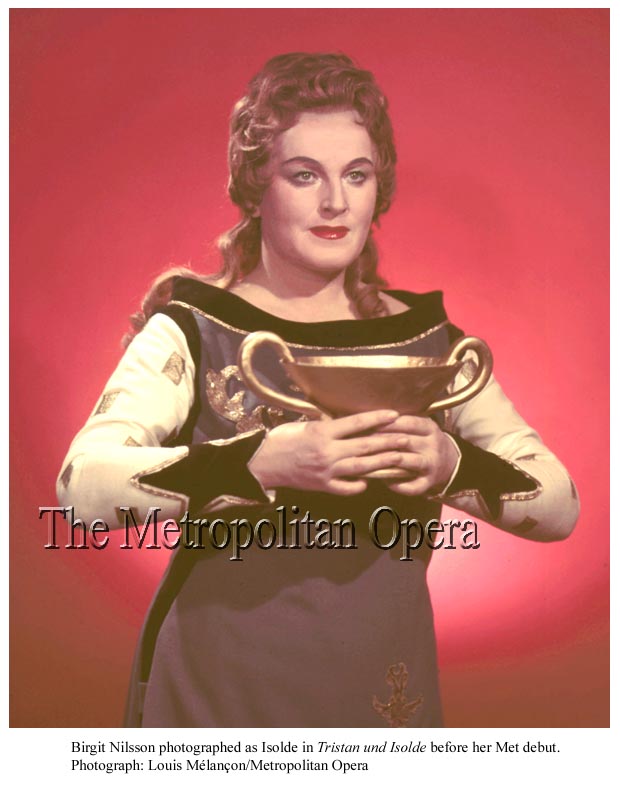
Samedi 9 janvier 1960 : Tristan und Isolde. Metropolitan Opera de New York. Bohm. Vinay. Birgit Nilsson (Isolde). Cassel. Dalis. Hines. Marsh.
Mardi 12 janvier 1960 : Tristan und Isolde. Metropolitan Opera de New York. Bohm. Vinay. Birgit Nilsson (Isolde). Cassel. Dalis. Hines. Marsh.
Vendredi 15 janvier 1960 : Tristan und Isolde. Metropolitan Opera de New York. Bohm. Vinay. Birgit Nilsson (Isolde). Cassel. Dalis. Hines. Marsh.
Jeudi 21 janvier 1960 : Tristan und Isolde. Metropolitan Opera de New York. Bohm. Liebl. Birgit Nilsson (Isolde). Cassel. Ludwig. Hines. Marsh.
Mardi 26 janvier 1960 : Tristan und Isolde. Philadelphie. Bohm. Vinay. Birgit Nilsson (Isolde). Cassel. Ludwig. Borg. Marsh.
Samedi 30 janvier 1960 : Tristan und Isolde. Metropolitan Opera de New York. Bohm. Vinay. Birgit Nilsson (Isolde). Cassel. Ludwig. Borg. Marsh.
Mardi 9 février 1960 : Die Walkure. Metropolitan Opera de New York. Bohm. Birgit Nilsson (Brunnhilde). Vickers. Nordmo-Lovberg. Hines. Dalis. Ernster.
Review of R. A. E. in the March 1960 issue of Musical America
As it was with "Tristan und Isolde" earlier this season, so it was with "Die Walküre" in this Metropolitan revival after a two-season absence: Given the right singers and conductor, the Wagnerian operas become as dramatically cogent and musically exciting as the more popular works in the repertoire.
For this first performance, the Metropolitan had assembled a sometimes superb, always admirable cast. Birgit Nilsson, as Brünnhilde; Aase Nordmo-Lövberg, as Sieglinde; Jon Vickers, as Siegmund; and Jerome Hines, as Wotan, were all appearing in their roles for the first time at the Metropolitan. Irene Dalis reappeared as Fricka; Deszo Ernster was a familiar figure as Hunding. The Valkyries were Heidi Krall, Carlotta Ordassy, Gloria Lind, Margaret Roggero, Martha Lipton, Mignon Dunn, Helen Vanni, and Belen Amparan. Herbert Graf had staged the work in the lack-luster Simonson settings, and the estimable Karl Böhm was in charge in the orchestral pit.
Perhaps the most noteworthy of the many outstanding factors of the evening was Mr. Vickers' Siegmund. No tenor at the Metropolitan for decades has been able to encompass both the heroic and lyric elements of the role with such mastery. He was equally effective in such tremendous outbursts as the "Wälse! Wälse!" and in the softly tender expressions of his devotion to Sieglinde in Act II.
As might have been expected, Miss Nilsson managed Brünnhilde's music with unfailing beauty of tone and dramatic awareness. From the clarion brightness of her "Ho-yo-to-ho" to the poignant appeal of her "War es so schmählich?" this was a magnificent performance.
Samedi 13 février 1960 : Fidelio. Metropolitan Opera de New York. Bohm, Vickers, Birgit Nilsson (Leonore), Uhde, Czerwenka, Hurley, Anthony, Tozzi.
Samedi 20 février 1960 : Die Walkure. Metropolitan Opera de New York. Bohm. Birgit Nilsson (Brunnhilde). Vickers. Nordmo-Lovberg. Hines. Dalis. Ernster.
Lundi 7 mars 1960 : Die Walkure. Opera royal de Stockholm. Ehrling. Svanholm. Bjorker. Berglund. Lund-Christiansen. Birgit Nilsson (Brunnhilde). Meyer.
Jeudi 10 mars 1960 : Der Rosenkavalier. Opera royal de Stockholm. Ehrling. Birgit Nilsson (Die Marschallin). Tyren. Soderstrom. Sundquist. Prytz. Kjellgren. Vikstrom. Ericson.
Dimanche 13 mars 1960 : Fidelio. Opera royal de Stockholm. Ehrling. Sundquist. Naslund. C. Soderstrom. Birgit Nilsson (Leonore). Tyren. E. Soderstrom. Vikstrom.
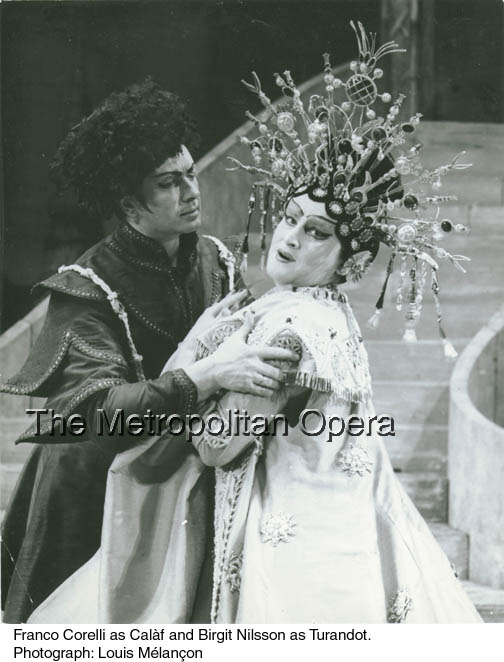
Lundi 21 mars 1960 : Turandot. Scala de Milan. Votto. Birgit Nilsson (Turandot). Mercuriali. Modesti. Corelli. Petrella.
Jeudi 24 mars 1960 : Turandot. Scala de Milan. Votto. Birgit Nilsson (Turandot). Mercuriali. Modesti. Corelli. Petrella.
Dimanche 27 mars 1960 : Scala de Milan. Indisposee, Birgit Nilsson est remplacée par Margherita Casals Mantovani dans le rôle de Turandot.
Jeudi 31 mars 1960 : Turandot. Scala de Milan. Votto. Birgit Nilsson (Turandot). Mercuriali. Modesti. Corelli. Petrella.
Dimanche 3 avril 1960 : Turandot. Scala de Milan. Votto. Birgit Nilsson (Turandot). Mercuriali. Modesti. Corelli. Petrella.
Mercredi 6 avril 1960 : Turandot. Scala de Milan. Votto. Birgit Nilsson (Turandot). Mercuriali. Modesti. Corelli. Tosini.
Jeudi 14 avril 1960. Aida. Scala de Milan. Sanzogno. Ferrin. Simionato. Birgit Nilsson (Aida). Ferraro. Ghiaurov. McNeil.
Jeudi 21 avril 1960 : Aida. Scala de Milan. Sanzogno. Ferrin. Simionato. Birgit Nilsson (Aida). Ferraro. Ghiaurov. McNeil.
Jeudi 21 avril 1960 : A Paris, Birgit Nilsson reçoit l’ Orphée d’ or de la meilleure chanteuse (prix Ninon Vallin) pour les airs de Beethoven, Weber et Mozart. La cantatrice n’ étant pas sur place pour la remise du trophée, c’est Mr Cros, président directeur général de la société Pathé Marconi, qui reçoit l’ Orphée d’ Or en son nom.
Dimanche 24 avril 1960 : Aida. Scala de Milan. Sanzogno. Ferrin. Simionato. Birgit Nilsson (Aida). Ferraro. Ghiaurov. McNeil.
Mardi 26 avril 1960 : Aida. Scala de Milan. Sanzogno. Ferrin. Simionato. Birgit Nilsson (Aida). Puma. Vinco. McNeil.
Samedi 30 avril 1960 : Aida. Scala de Milan. Sanzogno. Ferrin. Simionato. Birgit Nilsson (Aida). Ferraro. Zaccaria. McNeil.
Dimanche 8 mai 1960 : Aida. Scala de Milan. Sanzogno. Ferrin. Simionato. Birgit Nilsson (Aida). Ferraro. Zaccaria. McNeil.
Jeudi 12 mai 1960 : Fidelio. Staatsoper de Vienne. Hollreiser. Liebl. Birgit Nilsson (Leonore). Uhde. Hotter. Bohme. Seefried. Equiluz.
Samedi 14 mai 1960 : Tosca. Staatsoper de Vienne. Molinari-Pradelli. Birgit Nilsson (Floria Tosca). Poggi. Protti.
Dimanche 22 mai 1960 : Aida. Staatsoper de Vienne. Cluytens. Guthrie. Ludwig. Birgit Nilsson (Aida). Labo. Frick. Bastianini.
Jeudi 26 mai 1960 : Tristan und Isolde. Staatsoper de Vienne. Karajan. Windgassen. Frick. Birgit Nilsson (Isolde). Wiener. Uhde. Gorr.
Mercredi 1 juin 1960 : Die Walkure. Staatsoper de Vienne. Karajan. Windgassen. Frick. Hotter. Brouwenstijn. Birgit Nilsson (Brunnhilde). Gorr.
Dimanche 5 juin 1960 : Siegfried. Staatsoper de Vienne. Karajan. Windgassen. Birgit Nilsson (Brunnhilde). Edelmann. Neidlinger. Stolze. Frick. Madeira.
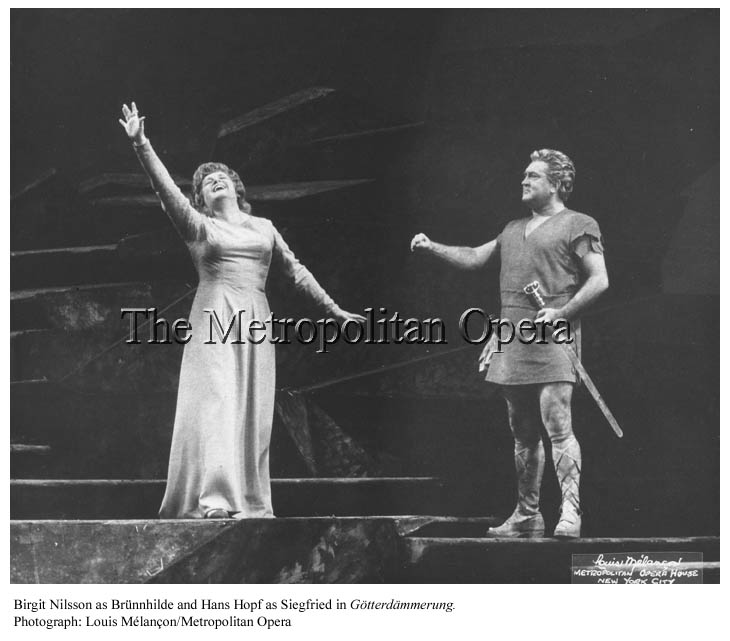
Dimanche 12 juin 1960 : Gotterdammerung. Staatsoper de Vienne. Karajan. Windgassen. Birgit Nilsson (Brunnhilde). Brouwenstijn. Frick. Uhde. Pernerstorfer. Gorr.
Mardi 14 juin 1960 : Gotterdammerung. Staatsoper de Vienne. Karajan. Windgassen. Birgit Nilsson (Brunnhilde). Brouwenstijn. Frick. Uhde. Pernerstorfer. Gorr.
Mercredi 27 juillet 1960 : Die Walkure. Festival de Bayreuth. Kempe, Windgassen, Frick, Hines, Birgit Nilsson (Brunnhilde), Nordmo-Lovberg, Topper.
Jeudi 28 juillet 1960 : Siegfried. Festival de Bayreuth. Kempe, Hopf, H. Kraus, Uhde, O. Kraus, Roth-Ehrang, Hoffgen, Birgit Nilsson (Brunnhilde).
Samedi 30 juillet 1960 : Gotterdammerung. Festival de Bayreuth. Kempe. Hopf. Stewart. Kraus. Frick. Birgit Nilsson (Brunnhilde). Bjoner. Hoffman.
Jeudi 18 août 1960 : Siegfried. Festival de Bayreuth. Kempe, Hopf, H. Kraus, Uhde, O. Kraus, Roth-Ehrang, Hoffgen, Birgit Nilsson (Brunnhilde).
Lundi 29 août 1960 : Un ballo in maschera. Londres Royal Opera House Covent Garden (tournée du Royal Opera de Stockholm) Ehrling. Lundborg. Tyren. Nordin. Ulfung. Saeden. Ohlson. Meyer. Wixell. Birgit Nilsson (Amelia).
Mercredi 31 août 1960 : Un ballo in maschera. Londres Royal Opera House Covent Garden (tournée du Royal Opera de Stockholm) Ehrling. Lundborg. Tyren. Nordin. Ulfung. Saeden. Ohlson. Meyer. Wixell. Birgit Nilsson (Amelia).
Samedi 3 septembre 1960 : Die Walkure. Staatsoper de Vienne. Karajan. Windgassen. Frick. Hotter. Crespin. Birgit Nilsson (Brunnhilde). Gorr.
Lundi 5 septembre 1960 : Siegfried. Staatsoper de Vienne. Karajan. Windgassen. Birgit Nilsson (Brunnhilde). Hotter. Pernerstorfer. Klein. Frick. Roessel-Majdan.
Jeudi 8 septembre 1960 : Gotterdammerung. Staatsoper de Vienne. Karajan. Windgassen. Birgit Nilsson (Brunnhilde). Brivkalne. Frick. Alexander. Pernerstorfer. Gorr.
Dimanche 11 septembre 1960 : Tristan und Isolde. Staatsoper de Vienne. Karajan. Windgassen. Frick. Birgit Nilsson (Isolde). Neidlinger. Szemere. Rössel-Majdan.
Samedi 1 octobre 1960 : Aida. Staatsoper de Vienne. Von Matacik. Franc. Ludwig. Birgit Nilsson (Aida). Ottolini. Kreppel. Hotter.
Mardi 4 octobre 1960 : Die Walküre. Royal Opera House Covent Garden. Birgit Nilsson (Brunnhilde)
Jeudi 6 octobre 1960 : Siegfried. Royal Opera House Covent Garden. Birgit Nilsson (Brunnhilde)
Samedi 8 octobre 1960 : Götterdämmerung. Royal Opera House Covent Garden. Birgit Nilsson (Brunnhilde)
Lundi 21 novembre 1960 : Die Walkure. Opéra de Chicago. Von Matacic. Vickers. Brouwenstijn, Wildermann. Hotter. Birgit Nilsson (Brunnhilde). Ludwig.
Dimanche 4 décembre 1960 : Concert Carnegie Hall. Tibor Kozma / Birgit Nilsson / Symphony of the Air. Der Freischutz (ouverture), Ah, perfido (Beethoven), La forza del destino (ouverture), Morro, ma prima in Grazia (Un ballo in maschera), Pace, Pace, mio dio (La forza del destino), Dich, teure Halle (Tannhauser), mort de Siegfried et marche funèbre, Starke Scheite schichtet mir dort (Die Gotterdammerung).
Samedi 17 décembre 1960 : Fidelio. Scala de Milan. Karajan. Crass. Hotter. Vickers. Birgit Nilsson (Leonore). Frick. Lipp. Unger.
Mardi 20 décembre 1960 : Fidelio. Scala de Milan. Karajan. Crass. Hotter. Vickers. Birgit Nilsson (Leonore). Frick. Lipp. Unger.
Jeudi 22 décembre 1960 : Fidelio. Scala de Milan. Karajan. Crass. Hotter. Vickers. Birgit Nilsson (Leonore). Frick. Lipp. Unger.J
eudi 29 décembre 1960 : Fidelio. Opera royal de Stockholm. Gielen. Sundquist. Bjorling. Hoiseth. Birgit Nilsson (Leonore). Tyren. Af Malmborg. Vikstrom.
1960-1969
1961
Mardi 3 janvier 1961 : Fidelio. Scala de Milan. Karajan. Crass. Hotter. Vickers. Birgit Nilsson (Leonore). Frick. Lipp. Unger.
Jeudi 5 janvier 1961 : Fidelio. Scala de Milan. Karajan. Crass. Hotter. Vickers. Birgit Nilsson (Leonore). Frick. Lipp. Unger.
Dimanche 8 janvier 1961 : Die Walkure. Staatsoper de Vienne. Karajan. Vickers. Kreppel. Hotter. Zadek. Birgit Nilsson (Brunnhilde). Malaniuk.
Mardi 10 janvier 1961 : Gotterdammerung. Staatsoper de Vienne. Karajan. Windgassen. Birgit Nilsson (Brunnhilde). Scheyrer. Roth-Ehrang. Hotter. Pernerstorfer. Ludwig.
Jeudi 12 janvier 1961 : Die Walkure. Opéra royal de Stockholm. Gielen. Svanholm. Tyren. Bjorling. Lund-Christiansen. Birgit Nilsson (Brunnhilde). Ericson.
Dimanche 15 janvier 1961 : Concert Cirkus, Stockholm. Nils Grevillius / Birgit Nilsson. Ci-dessous ; Pace, pace mio dio (La forza del destino) :
Mercredi 25 janvier 1961 : Tannhauser. Metropolitan Opera de New York. Strasfogel. Hopf. Birgit Nilsson (Elisabeth). Waechter. Harshaw. Wilderman. Nagy. Franke. Harvuot. Scott.
Review of Robert Sabin in the March 1961 issue of Musical America
This performance was memorable not only for the debut of Mr. Wächter but for the first Metropolitan Elisabeth of Miss Nilsson, who was appearing for the first time this season. Miss Harshaw was also heard for the first time in the role of Venus and Mr. Strasfogel conducted the opera for the first time at the Metropolitan, taking over from Georg Solti.
Having heard Mr. Wächter at Bayreuth as Amfortas in "Parsifal," as Kothner in "Die Meistersinger," and as the Heerrufer in "Lohengrin" (in all of which roles he was superb) I knew that he would be a distinguished Wolfram. And so he proved to be. His handsome appearance, his impeccable diction, his eloquent and finished singing made a profound impression. He is not one of the operatic Bulls of Bashan. His voice does not make the rafters tremble or the standees scream with excitement. But it is ample for all artistic needs and he uses it with the utmost intelligence and expressiveness. Would that we had more of his kind!
Miss Nilsson has never sung more beautifully. Happy is the opera house that can boast three such Elisabeths as Leonie Rysanek, Victoria de los Angeles and Birgit Nilsson! Not only in the grander phrases but in the subtler and more lyrical passages Miss Nilsson's voice had a roundness, a silvery glow and a marvelous smoothness reminiscent of the golden era of Flagstad. Dramatically, too, she revealed a thorough understanding of the character. Her mounting pain and horror in the scene in the Wartburg showed how carefully she had studied Wagner's text.
Mardi 31 janvier 1961 : Tristan und Isolde. Metropolitan Opera de New York. Rosenstock. Vinay. Birgit Nilsson (Isolde). Cassel. Dalis. Hines. Uhde.
Review of Winthrop Sargeant in the New Yorker
On Tuesday night of last week, I attended the Metropolitan Opera's "Tristan and
Isolde" in an extremely critical frame of mind. Like nearly everybody else, I had greeted Birgit Nilsson's Isolde last year as a sunrise following the long period of darkness that enveloped Wagnerian sopranos with the retirement of Kirsten Flagstad. But I was aware that Miss Nilsson's voice is not quite the rich and incredibly voluminous one that Miss Flagstad hurled across the footlights with such wonderful ease. I was anxious to check again, and determine whether Miss Nilsson was really as good as I had thought she was. Before the first act was over, my doubts were set at rest. Miss Nilsson is not a Flagstad, but she is a Nilsson - something that is perhaps not as overwhelming but that is certainly remarkable enough. Her characterization of the role is exceedingly subtle and convincing; her high notes come through with ringing splendor; and her musical sense - evident in exquisite touches of phrasing and emphasis - is very nearly flawless. Last year I noted her fastidiousness in musical style, and referred to her as a very neat and well-schooled singer. But there is more than that to her Isolde. It is warm and touching, as well as brilliant where brilliance is called for. The sunrise is there, all right, and it is a resplendent one.
It is unfortunate that the Metropolitan has not yet found a Tristan to match Miss Nilsson's Isolde. Ramon Vinay, who undertook the role the other night, has, in his time, been a distinguished singer and a notable Tristan, and he still has the remains of a noble Wagnerian style. But the style is not of much service without the physical volume to project it, and in physical volume his voice has deteriorated to a tragic extent. He was unable to do more than outline his role, in tones that scarcely rose above a whisper. This difficulty posed a problem for the conductor, Joseph Rosenstock, who was called upon to adjust the orchestral sonority so that Mr. Vinay could occasionally be heard, or else to drown him out altogether in giving Miss Nilsson suitable support for her ample tones. Most of the time, Mr. Vinay was drowned out, but there was nothing else to he done, and on the whole Mr. Rosenstock brought an agreeable feeling of solidity and authority to his reading of the score. The lesser roles were very ably done. As Brangäne, Irene Dalis sang with beautiful control, reaching a peak of eloquence in those offstage phrases of the second act that help make up what to me is, aside from the "Liebestod," the most magical episode of the entire opera. Walter Cassel was again perhaps the most stylish and engaging Kurvenal I have ever encountered. It remains a mystery to me why this superb baritone - one of the Metropolitan's finest actors as well as a magnificent singer - is not more often used at the opera house, where he frequently stands aside in favor of second-rate artists. His Kurvenal has a special quality, to which masculinity, nerviness, and an extraordinarily handsome stage presence all contribute. Altogether, with the sole exception of Mr. Vinay's vocally weak interpretation of the hero's role, this was a memorable "Tristan," in which even the smaller parts - Jerome Hines' King Marke and Hermann Uhde's Melot among them - were performed with great distinction.
Vendredi 3 février 1961 : Tannhauser. Metropolitan Opera de New York. Strasfogel. Hopf. Birgit Nilsson (Elisabeth). Waechter. Dunn. Wilderman. Nagy. Franke. Harvuot. Scott.
Lundi 6 février 1961 : Tristan und Isolde. Metropolitan Opera de New York. Rosenstock. Vinay. Birgit Nilsson (Isolde). Cassel. Dalis. Hines. Uhde.
Samedi 11 février 1961 : Tannhauser. Metropolitan Opera de New York. Strasfogel. Hopf. Birgit Nilsson (Elisabeth). Waechter. Harshaw. Wilderman. Nagy. Franke. Harvuot. Scott.
Jeudi 16 février 1961 : Tristan und Isolde. Metropolitan Opera de New York. Rosenstock. Vinay. Birgit Nilsson (Isolde). Cassel. Dunn. Hines. Marsh.
Vendredi 24 février 1961 : Turandot. Metropolitan Opera de New York. Stokowski. Birgit Nilsson (Turandot). Corelli. Moffo. Giaiotti. De Paolis.
Review of Harold C. Schonberg in the N. Y. Times
Finally Puccini's "Turandot" came to the stage of the Metropolitan Opera. It had been absent since 1/8/1930, and one of the reasons for its absence was the lack of a soprano to sing the title role. Puccini wrote a ferociously demanding part, one that requires extraordinary strength of voice and stamina.
Birgit Nilsson sang it last night, and left no question about her mastery of the role. From her [first] phrases in the second act-she appears briefly in the first act and does not sing-the audience knew she was in prime voice.
As the act proceeded and Miss Nilsson swung into the great aria, "In questa reggia." she was triumphant. Her voice soared full and solidly, over orchestra, chorus and soloists, up to a tremendous high C that sounded as if there were still plenty in reserve.
Samedi 4 mars 1961 : Turandot. Metropolitan Opera de New York. Stokowski. Birgit Nilsson (Turandot). Corelli. Moffo. Giaiotti. De Paolis. Guarrera. Nagy. Anthony.
Jeudi 9 mars 1961 : Turandot. Metropolitan Opera de New York. Stokowski. Birgit Nilsson (Turandot). Corelli. Stratas. Giaiotti. De Paolis.
Lundi 13 mars 1961 : Turandot. Metropolitan Opera de New York. Stokowski. Birgit Nilsson (Turandot). Corelli. Stratas. Giaiotti. De Paolis.
Samedi 18 mars 1961 : Tristan und Isolde. Metropolitan Opera de New York. Rosenstock. Liebl. Birgit Nilsson (Isolde). Cassel. Dalis. Hines. Marsh. Anthony. Franke. Sgarro.
Mardi 21 mars 1961 : Turandot. Philadelphie. Stokowski. Birgit Nilsson (Turandot). Corelli. Price. Wilderman. De Paolis.
Vendredi 24 mars 1961 : Turandot. Metropolitan Opera de New York. Stokowski. Birgit Nilsson (Turandot). Corelli. Amara. Wilderman. De Paolis.
Mercredi 29 mars 1961 : Turandot. Metropolitan Opera de New York. Stokowski. Birgit Nilsson (Turandot). Corelli (acte 1), Gari (actes 2 et 3). Price. Wilderman. De Paolis.
Samedi 8 avril 1961 : Turandot. Metropolitan Opera de New York. Stokowski. Birgit Nilsson (Turandot). Corelli. Albanese. Giaiotti. De Paolis.
Mardi 11 avril 1961 : Turandot. Metropolitan Opera de New York. Stokowski. Birgit Nilsson (Turandot). Corelli. Moffo. Giaiotti. De Paolis.
Vendredi 14 avril 1961 : Aida. Metropolitan Opera de New York. Verchi. Birgit Nilsson (Aida). Baum. Cvejic. Colzani. Scott. Flagello.
Mercredi 19 avril 1961 : Turandot. Boston. Stokowski. Birgit Nilsson (Turandot). Corelli. Amara. Giaiotti. De Paolis.
Mercredi 26 avril 1961 : Turandot. Cleveland. Adler. Birgit Nilsson (Turandot). Corelli. Amara. Giaiotti. De Paolis.
Lundi 1 mai 1961 : Turandot. Atlanta. Adler. Birgit Nilsson (Turandot). Corelli. Amara. Giaiotti. De Paolis.
Review of Bruce Galphin in the Atlanta Constitution
Nilsson's Magical Soprano Casts Its Spell as Turandot
The 5,000 most satisfied people in America Monday must have been in the Fox Theater audience at the Metropolitan Opera's "Turandot" production here. The curtain-raiser had been anticipated on at least half a dozen counts in addition to the first-night glamour. It more than lived up to expectations. A generation has passed since "Turandot" last graced the boards, during which time it has sunk into the semi-oblivion of occasional recordings. In view of its musical splendor and dramatic excitement, its neglect is, at first, hard to understand.
But with the [beginning] of the second act, the explanation becomes apparent: "Turandot," besides executing many a wooing prince, also is a soprano-killer. It builds to one of the longest vocal crescendos in the literature, demanding prolonged periods above high C. In short, it takes a soprano of Birgit Nilsson's power and range to handle its near-Wagnerian proportions. The audience was well advised in its wild acclaim of Miss Nilsson. Without her, the long scene beginning with the awesome "In Questa Reggia" and concluding with the vanquishing of the "fire and ice" after the riddle solving, would have collapsed, and with it, the entire production. Instead, it was a real stunner, mounting constantly in intensity and splendor.
Franco Corelli, whose Atlanta debut was among the major attractions Monday night, showed why he has been receiving such loud huzzahs abroad. Corelli's good looks already have been well publicized. His stage presence is a lesser known quality. His tone is clear and exact and ranks him among the best of the best.
Mercredi 10 mai 1961 : Aida. Saint-Louis. Verchi. Birgit Nilsson (Aida). Corelli. Dalis. Merrill. Giaiotti. Flagello.
Samedi 13 mai 1961 : Turandot. Chicago. Adler. Birgit Nilsson (Turandot). Corelli. Amara. Giaiotti. De Paolis.
Review of Claudia Cassidy in The Chicago Tribune
On the Aisle
Franco Corelli Joins Birgit Nilsson in a Stunning 'Turandot'
The third time's the charm and style, the open sesame. After two disasters in the maligned name of opera, the Metropolitan brought Franco Corelli to town with Birgit Nilsson in a stunning new " Turandot." Superbly staged by Yoshio Aoyama in Cecil Beaton's dreams of faraway legends that pass as scenery and costumes, it could almost make you forget that the plaster is not quite ready at McCormick Place to have air conditioning turned on full blast. Miss Nilsson patted her Turandot legend of a face once or twice, but it stayed beautifully put. Still, some of us remembered the summer night at Ravinia when Leon Rothier's Mephisto goatee skidded and stuck rakishly to his oblivious throat.
Between acts, that is. While the curtain was up, and it sometimes took a long time to rise on those complicated double scenes, "Turandot" held undivided attention. The fortunate have heard it sung to the hilt on other occasions, but seldom, if ever, as marvelously staged. Mr. Beaton had conjured ancient walls in mauve gray and fabulous towers at fascinating angles against which he set such costumes as Turandot's in vermilion and magenta and turquoise against tall Calaf's Tartar look with the black fur cap and the long black cape slashed with scarlet lining, plus hordes of servitors, counselors, executioners, wraiths and mimes, and high on his imperial throne, the tottering, gleeful old emperor in imperial yellow, gleaming like some withered, but indomitable, sun. And for every costume, the perfect make-up, the savage striking against the imperturbable like a gong.
If you remember the infinite subtlety of Mr. Aoyama's "Butterfly," you can expand it into massive brilliance of "Turandot." The man is a kind of magician in that he can lift an authoritative hand and the Metropolitan stage so drab with "Aida," so coarse with "Martha," turns mesmeric with "Turandot." On that stage and into that challenge came two stars of extraordinary brilliance. Miss Nilsson, who has a broadsword of a soprano, really unsheathed it for the big house. It is steel, but tempered steel, and the higher it mounts the more dangerous its sound, for at the highest altitude it releases a new and lambent beauty. No change there - just more so.
Mr. Corelli, the tall young Italian - 6 feet, 2 - from Ancona on the Adriatic, is a strikingly handsome man with a beautiful voice. It is a soaring voice with the edge of courage on it, yet an Italian voice with the caressing timbre and the turn of a phrase that displays the truest Puccini beauty. He has stage sense in every move, and he knows precisely how to give an audience the full delight of the duel of the man and the woman of ice, how to conjure in the dusk the poignancy of Puccini's last throbbing nocturne, "Nessun dorma."
Mercredi 17 mai 1961 : Turandot. Minneapolis. Adler. Birgit Nilsson (Turandot). Corelli. Amara. Giaiotti. De Paolis.
Vendredi 19 mai 1961 : Aida. Minneapolis. Verchi. Birgit Nilsson (Aida). Fernandi. Dunn. Colzani. Giaiotti. Flagello.
Review of John K. Shermann in the Minneapolis Star
Nilsson and Dunn Shine as 'Aida' Replacements
Two indisposed singers - Leonie Rysanek and Irene Dalis - made last night's performance of Verdi's "Aida" a surprise package for clients of the Metropolitan Opera season. Regrets over not hearing these two were balanced by the thrill of hearing their two replacements in some of the finest female singing heard in Northrop auditorium.
Surely an extra dividend for operagoers was the opportunity of again hearing Birgit Nilsson, who sang the title role and, more than that, of hearing her in a warm and human role after her portrayal of the cold and merciless Princess Turandot of two evenings before. As for Mignon Dunn, who took over the Amneris part for the first time on the Met's stage, her performance was a triumph, no less. Her vocalism and acting were both on a consistently high level, and perfectly merged. So we were twice lucky in a substitution situation which too often is a letdown.
In fact, the evening was virtually theirs. Nilsson revealed what "Turandot" does not allow her to show - great versatility as a singing actress with nuances and depth of characterization and singing that strikes a full range of emotional chords. As before, her voice and technique seem to know no obstacles, the tone rings out straight and clear at all levels, with the high and loud notes approached by the most artful phrasing to make them not a screech, but a natural, unforced climax. We heard more of her beautiful lower range: the pathos of the role was well delineated without undue emotionalism. She and Miss Dunn made their tempestuous duet the first high point of the opera, and the latter crowned her performance by the fire, anguish and despair of her Act IV aria, eloquently conveyed by singing of dramatic conviction and tonal opulence, joined with a histrionic skill to match.
Lundi 22 mai 1961 : Turandot. Detroit. Adler. Birgit Nilsson (Turandot). Corelli. Amara. Giaiotti. De Paolis.
Vendredi 26 mai 1961 : Aida. Detroit. Verchi. Birgit Nilsson (Aida). Corelli. Dunn. Guarrera. Giaiotti. Flagello.
Mardi 30 mai 1961 : Turandot. Toronto (Canada). Adler. Birgit Nilsson (Turandot). Corelli. Stratas. Giaiotti. De Paolis.
Review of John Kraglund in the Toronto Globe and Mail
Dazzling Birgit Nilsson Makes Grand Theatre of Turandot
If the name Turandot was not emblazoned in the Toronto sky over the O'Keefe Centre last night, it was because the cosmic forces had concentrated upon the spelling of Birgit Nilsson, who interpreted the title role in the Puccini opera. The second production in the Metropolitan Opera Company's Toronto season, sponsored by the Rotary Club, was the most convincing evidence this city has ever been offered that grand opera is also grand theatre. Before this review becomes hopelessly entangled in superlatives inadequate to describe the artistry of Miss Nilsson, it should be pointed out that the production as a whole warranted almost unqualified praise.
The reservations that exist were often prompted by comparative factors, but I, for one, would not have exchanged perfect balance for the imbalance occasioned by Miss Nilsson's dazzling performance. The production, originally by Yoshio Aoyama, made its initial impact through eyes dampened by lavish and authentic exciting sets and costumes designed by Cecil Beaton, and even this had been preceded by an initial hint of excitement in the orchestral chords that serve as a prelude.
Conductor Kurt Adler gave ample evidence of musianship and keen insight into the dramatic aspects of the opera as the performance progressed. But the start had been a trifle slow, for the chorus imparted little of its bloodthirsty character at the [beginning]. Consequently its change of heart was little more than a change of volume.
The initial impact provided by Miss Nilsson, making her local debut, was also visual, for in the first act she does not sing. However, Franco Corelli, probably the handsomest tenor on any stage, who was also making his first Toronto appearance, quickly made his presence felt with his ringing tones throughout the densest choral textures. It was unfortunate he did not maintain this level throughout. I can only put it down to end-of-season fatigue, for on the one previous occasion when I heard him he made it quite clear that he had the vocal quality and stamina to rise to provide as much excitement as even the greatest soprano. But there were occasions, as the opera progressed, when his voice faded into the background and, unless my ears deceived me, he did not sing his final line at all.
Vendredi 9 juin 1961 : Die Walkure. Staatsoper de Vienne. Karajan. Vickers. Frick. Hotter. Rysanek. Birgit Nilsson (Brunnhilde). Roessel-Majdan.
Dimanche 11 juin 1961 : Siegfried. Staatsoper de Vienne. Karajan. Windgassen. Birgit Nilsson (Brunnhilde). Hotter. Pernerstorfer. Klein. Frick. Madeira.
Mardi 13 juin 1961 : Gotterdammerung. Staatsoper de Vienne. Karajan. Windgassen. Birgit Nilsson (Brunnhilde). Scheyrer. Frick. Wiener. Pernerstorfer. Roessel-Majdan.
Jeudi 22 juin 1961 : Turandot. Staatsoper de Vienne. Molinari-Pradelli. Birgit Nilsson (Turandot). Klein. Zaccaria. Di Stefano. Price. Paskalis. Lorenzi. Dickie. Pernerstorfer.
Samedi 24 juin 1961 : Turandot. Staatsoper de Vienne. Molinari-Pradelli. Birgit Nilsson (Turandot). Klein. Zaccaria. Di Stefano. Price.
Lundi 26 juin 1961 : Turandot. Staatsoper de Vienne. Molinari-Pradelli. Birgit Nilsson (Turandot). Klein. Zaccaria. Di Stefano. Price.
Mercredi 28 juin 1961 : Concert Birgit Nilsson, Paul Klecki. Paris, théâtre des Champs-Elysees. Beethoven (Fidelio), Wagner (Gotterdammerung, Tristan und Isolde).
Vendredi 28 juillet 1961 : Siegfried. Festival de Bayreuth. Kempe, Hopf, H. Kraus, Milligan, O. Kraus, Roth-Ehrang, Hoffgen. Birgit Nilsson (Brunnhilde). Felderer.
Dimanche 30 juillet 1961 : Gotterdammerung. Festival de Bayreuth. Kempe. Hopf. Stewart. Kraus. Frick. Birgit Nilsson (Brunnhilde). Schmidt. Hoffman. Schärtel. Crespin. Felderer. Steiner.
Mercredi 23 août 1961 : Siegfried. Festival de Bayreuth. Kempe, Hopf, H. Kraus, Milligan, O. Kraus, Roth-Ehrang, Hoffgen, Birgit Nilsson (Brunnhilde).
Vendredi 25 août 1961 : Gotterdammerung. Festival de Bayreuth. Kempe. Hopf. Stewart. Kraus. Frick. Birgit Nilsson (Brunnhilde). Schmidt. Hoffman.
Dimanche 3 septembre 1961 : Un ballo in maschera. Opéra royal de Stockholm. Folke Nilsson. Ulfung. Hasslo. Birgit Nilsson (Amelia). Lundborg. Tyren. Ericson.
Vendredi 8 septembre 1961 : Aida. Staatsoper de Vienne. Klobucar. Pernerstorfer. Simionato. Birgit Nilsson (Aida). Bergonzi. Frick. Hotter.
Dimanche 10 septembre 1961 : Fidelio. Staatsoper de Vienne. Hollreiser. Windgassen. Birgit Nilsson (Leonore). Guthrie. Schoffler. Kreppel. Seefried. Klein.
Mercredi 27 septembre 1961 : Turandot. Staatsoper de Vienne. Cleva. Birgit Nilsson (Turandot). Klein. Zaccaria. Nikolov. Gueden.
Vendredi 29 septembre 1961 : Turandot. Staatsoper de Vienne. Cleva. Birgit Nilsson (Turandot). Klein. Zaccaria. Nikolov. Gueden.
Samedi 28 octobre 1961 : Tosca. Opéra royal de Stockholm. Bendix. Birgit Nilsson (Floria Tosca). Andersson. Bjorling.
Mardi 31 octobre 1961 : Un ballo in maschera. Opéra royal de Stockholm. Folke Nilsson. Ulfung. Saeden. Birgit Nilsson (Amelia). Lundborg. Tyren. Meyer.
Samedi 4 novembre 1961 : Turandot. Metropolitan Opera de New York. Stokowski. Birgit Nilsson (Turandot). Tucker. Amara. Flagello. De Paolis.
Review of Robert Sabin in the December 1961 issue of Musical America
Richard Tucker sang his first Calaf at the Metropolitan at the season's first performance of "Turandot." He has the ringing top voice and stentorian production for the role, but interestingly and gratifyingly enough, his most impressive singing at this performance was in the lyrical passages. The climaxes were a bit dry and pinched in quality, but the voice as a whole had a new richness of color and expressiveness.
Another newcomer to his role was Mr. Flagello, as Timur, and he gave deeply moving performance. Miss Amara's specialty is high, gleaming, faultlessly supported top tones, and therefore she reveled in Liu's exquisite phrases, so wonderfully blended and colored with the orchestral instruments.
Though I did not mention Miss Nilsson first, she was, of course, the overwhelming feature of the evening.
The others were familiar in their roles. Mr. Stokowski seemed tired, and the performance lacked the smashing power and brilliance of last season's performances, although, as always, he elicited lush and beautiful sounds from the orchestra. The stage brass could not apparently see his beat (given without stick) and wavered in several places, though no such catastrophe occurred as did at one performance last season. when they came in fortissimo in the wrong place! Cecil Beaton's decor seemed as lovely as ever.
Mardi 7 novembre 1961 : Turandot. Metropolitan Opera de New York. Stokowski. Birgit Nilsson (Turandot). Tucker. Amara. Flagello. De Paolis.
Lundi 13 novembre 1961 : Fidelio. Opéra de Chicago. Maag. Knoll. Seefried. Wilderman. Birgit Nilsson (Leonore). Hotter. Vickers. Berry.
Vendredi 17 novembre 1961 : Fidelio. Opéra de Chicago. Maag. Knoll. Seefried. Wilderman. Birgit Nilsson (Leonore). Hotter. Vickers. Berry.
Mercredi 22 novembre 1961 : Fidelio. Opéra de Chicago. Maag. Knoll. Seefried. Wilderman. Birgit Nilsson (Leonore). Hotter. Vickers. Berry.
Vendredi 1 décembre 1961 : Turandot. Metropolitan Opera de New York. Adler. Birgit Nilsson (Turandot). Tucker. Price. Flagello. De Paolis.
Samedi 9 décembre 1961 : Gotterdammerung. Metropolitan Opera de New York. Leinsdorf. Birgit Nilsson (Brunnhilde). Hopf. Mittelmann. Bjoner. Wiemann. Dalis. Herbert.
Review of Paul Henry Lang in the Herald Tribune
'GÖTTERDÄMMERUNG'
Saturday night's performance of "Götterdämmerung" was a sort of preview of the postlude of The Ring cycle which will begin in chronological order next week. No matter. "Götterdämmerung" can stand by herself without her slim sisters and is apparently quite popular. The performance took from 7;30 to after midnight, the equivalent of three and a half Bruckner symphonies, or a couple of volumes of Gibbon, but with the kind of ending it has no one begrudges the longueurs, least of all Erich Leinsdorf who erased all the cuts from the twenty-five pound score.
But if the immensity of the opera seems forbidding, it none the less deserves a closer contemplation than the book warrants. For the literal-minded long-windedness of the dramatizer of the Nordic saga was also a musician who can give us marvelous mood pictures of sudden decisive power or, by contrast, exhibit a sensibility on the edge of tears against a background of grandeur charged with doom. `The cast contained one extraordinary singer, several very good ones, and some who, while lacking in sufficient vocal power, did fairly well under trying conditions.
Birgit Nilsson's Brünnhilde had many glorious moments - also some intermittent difficulties with just intonation. But what was so affecting about her performance was her womanliness. She was not just a dismounted cavalry girl, but a woman, torn between love, humiliation, pride and resignation. The other ladies, Irene Dalis, Rosalind Elias, Mignon Dunn and Martina Arroyo all had the voices to stand up to Wagnerian demands, but it seemed to me that Ingrid Bjoner, a good lyric soprano, was miscast as Gutrune.
Samedi 23 décembre 1961 : Die Walkure. Metropolitan Opera de New York. Leinsdorf. Birgit Nilsson (Brunnhilde). Vickers. Kuchta. Edelmann. Dalis. Wiemann. Krall. Ordassy. Arroyo. Dunn. Vanni. MacKenzie. Kriese. Roggero.
Review of Robert Sabin in the February 1962 issue of Musical America:
Once again, one rejoiced that Miss Nilsson's glorious voice was given to a splendid musician and skilled actress who could create for us the Brünnhilde of Wagner's imagination. To many of the younger generation her artistry will bring a new understanding of Wagner.
As for Mr. Vicker's Siegmund, it is the best I have ever encountered. He cannot make the walls of the Metropolitan bulge with the "Wälse, Wälse," as Melchior used to, but his singing and acting of the role as a whole have a romantic glow and a musical finish that are well nigh unique.Jeudi 29 décembre 1961 : Die Walkure. Metropolitan Opera de New York. Leinsdorf. Birgit Nilsson (Brunnhilde). Vickers. Kuchta. Symonette. Dalis. Frick.
1960-1969
1962
Mardi 2 janvier 1962 : Siegfried. Metropolitan Opera de New York. Leinsdorf. Hopf. Birgit Nilsson (Brunnhilde). London. Madeira. Kuen. Herbert. Frick.
Review of Robert Sabin in Musical America
This uncut "Siegfried" was full of delightful discoveries. I can offer Erich Leinsdorf no higher praise than to say that the beautiful playing of the orchestra brought back may vivid memories of Fritz Stiedry's inspired interpretation of this score. Nowhere was Wagner's miraculous sense of color and atmosphere more subtly employed than in this music, which stirs the intellect as it intoxicates the senses.
All of the members of the cast were new to their roles at the Metropolitan, except Miss Madeira and Mr. Herbert, and all of them were excellent. Mr. Hopf could not, in the nature of things, look like a young hero, but he sang and acted like one, with a full understanding of his marvelous musical opportunities. The pathos of the orphaned boy, his horror of evil and his need for love were very real to this fine singer and artist.
It needed no more than the awakening to stamp Miss Nilsson's Siegfried Brünnhilde as one of the great ones of all time. The plastique was memorably beautiful and her tones poured forth with a freshness, gleam and abundance that kept one tingling with amazement. Her final high C, instead of an agonized effort, was a rapturous outburst. Like Mr. Hopf, she was aware every second of what she was singing about, and it is a sad commentary on Wagnerian standards that I should have to single this as a rare virtue.
Vendredi 5 janvier 1962 : Gotterdammerung. Metropolitan Opera de New York. Leinsdorf. Birgit Nilsson (Brunnhilde). Hopf. Cassel. Kuchta. Frick. Dalis. Herbert.
Lundi 8 janvier 1962 : Turandot. Metropolitan Opera de New York. Adler. Birgit Nilsson (Turandot). Konya. Amara. Giaiotti. De Paolis.
Review of Miles Kastendieck in the New York Journal-American
Konya Equal to 'Turandot'
Sandor Konya sang his first Calaf in Puccini's "Turandot" at the Metropolitan last night. Looking every inch a prince and acting as such, he had the quality of voice to make the role quite real. Other tenors have had more brilliance for their top notes but have not sung with any more finesse. His was a performance that met the challenge of the rule successfully and left a satisfying impression of fitting nicely into it.
He was impressive in posing his question to the haughty Turandot after answering hers so triumphantly in the second act. Then, in the Palace Garden, he proved himself quite equal to the interpretation demanded and sang the last part of the scene with lyric grace. The audience obviously liked him.
Sustaining its top-billing as one of the thrilling performances the Met offers, "Turandot" varies little in general effectiveness as the season progresses. This fourth performance found Kurt Adler conducting with more musical control than dramatic intensity. He has a tendency to let the orchestral play too loud. Singers and conductor were not always together, and the offstage chorus strayed from strict timing. He conducts a faithful, straightforward performance.
Birgit Nilsson continues to dazzle everybody with her brilliant singing of the title role. It is difficult to get perspective on her because she maintains a standard of excellence with remarkable consistency. Not to hear her is to miss a great moment in opera these days.
Samedi 13 janvier 1962 : Siegfried. Metropolitan Opera de New York. Leinsdorf. Hopf. Birgit Nilsson (Brunnhilde). London. Madeira. Kuen. Herbert. Frick.
Samedi 20 janvier 1962 : Concert New York. Leopold Stokowski, Philadelphia Orchestra, Birgit Nilsson, George London.
Samedi 27 janvier 1962 : Gotterdammerung. Metropolitan Opera de New York. Leinsdorf. Birgit Nilsson (Brunnhilde). Hopf. Mittelmann. Kuchta. Frick. Dalis. Herbert.
Mercredi 31 janvier 1962 : Tosca. Metropolitan Opera de New York. Adler. Birgit Nilsson (Floria Tosca). Corelli. Colzani.
The reign of an unpredictable queen makes fascinating history and Birgit Nilsson's first Tosca last night at the Metropolitan Opera worked wonders with the soprano's vocal and emotional chemistry.
Unlike queens of nations, more than one may reign in an opera house, and Miss Nilsson has without doubt earned the title in the Wagnerian wing, and as Turandot. But Puccini's princess is an iceberg, and Wagner's ladies are either warriors, or odd in other ways. Most of them too removed from 20th century thinking to be taken seriously as typical women in love.
A Luscious Voice
Puccini's realism thus challenged Miss Nilsson as an actress, and her dramatic success as well as her vocal opulence made this one of the most exciting Toscas in recent years. Surprisingly, enough, Miss Nilsson to this listener vas more thrilling as Scarpia's murderer than as Tristan's distraught princess.
The soprano's voice has always displayed a meteoric brilliance but as Tosca it became luscious. And she acted with an impassioned intensity that brought her ovations from the dressy non-subscription audience. The performance, sponsored by the Metropolitan Opera Guild, was a benefit for the Met's production fund.
Tempting and Tempestuous
Though the size and radiance of Miss Nilsson's voice has caused her to be cast in, the heavy Wagnerian roles, she is actually more of a lyric-dramatic soprano than a true dramatic. Thus, by nature she was an ideal Tosca, while the role also, fortunately, inspired her to be a tempting and tempestuous woman. During the first
act she was finding her way, but by the second she sang with a voluptuous variety of color and dynamics. While her singing can still use more nuance in the Italian manner, her first portrayal of the role can still be considered a triumph.
Corelli the Prima Donna
Fortunately the four spit curls which tenor Franco Corelli had glued to each side of his handsome face couldn't be seen except at very close range. His height made him a proper foil for Miss Nilsson and he sang with healthy resonance and secure, ringing high notes which he held too long. He was he prima donna of the evening, Miss Nilsson, the great artist. Anselmo Colzani made an excellent Scarpia, sinister and vocally vibrant. Kurt Adler conducted with vigor.
Samedi 24 février 1962 : Turandot. Metropolitan Opera de New York. Adler. Birgit Nilsson (Turandot). Corelli. Albanese. Flagello. De Paolis.
Jeudi 1 mars 1962 : Turandot. Metropolitan Opera de New York. Adler. Birgit Nilsson (Turandot). Konya. Stratas. Wilderman. De Paolis.
Dimanche 18 mars 1962 : Concert Birgit Nilsson, Symphony Hall (Boston)
Dimanche 25 mars 1962 : Concert Birgit Nilsson, Carnegie Hall (New York). Présentation de Félix Gerstman. Birgit Nilsson / Léo Taubman (piano). Divinita infernal (Alceste), An die Musik, Aufloesung, Seligkeit (Schubert), Freundliche Vision, Zueignung (Richard Strauss), Traume, Schmerzen (Wagner), The tryst, spring is flying, sigh sedges sigh, black roses (Sibelius).
Vendredi 13 avril 1962. Tristan und Isolde. Londres Royal Opera House Covent Garden. Schmidt-Isserstedt. Birgit Nilsson (Isolde). Hoffman. Kraus. Windgassen. Evans. Ward.
Jeudi 3 mai 1962 : Turandot. Scala de Milan. Votto. Birgit Nilsson (Turandot). Mercuriali. Modesti. Corelli. Carteri.
Dimanche 6 mai 1962 : Turandot. Scala de Milan. Votto. Birgit Nilsson (Turandot). Mercuriali. Modesti. Corelli. Carteri.
Jeudi 31 mai 1962 : WIENER FESTWOCHEN 1962 SONDERKONZERT DER WIENER PHILHARMONIKER. Hans Knappertsbusch, Birgit Nilsson. Réalisation : Hermann Lanske.
Vendredi 1 juin 1962 : Die Walkure. Staatsoper Vienne. Karajan. Windgassen. Kreppel. Hotter. Rysanek. Birgit Nilsson (Brunnhilde). Rossel-Majdan.
Dimanche 3 juin 1962 : Siegfried. Staatsoper Vienne. Karajan. Windgassen. Birgit Nilsson (Brunnhilde). Hotter. Pernerstorfer. Klein. Roth-Ehrang. Rossel-Majdan.
Mercredi 6 juin 1962 : Gotterdammerung. Staatsoper Vienne. Karajan. Windgassen. Birgit Nilsson (Brunnhilde). Brouwenstijn. Frick. Wiener. Pernerstorfer. Hoffman.
Samedi 9 juin 1962 : Un ballo in maschera. Royal Opera de Stockholm. Folke Nilsson. Ulfung. Hasslo. Birgit Nilsson (Amelia). Lundborg. Tyren. Ericson.
Mardi 12 juin 1962 : Die Walkure. Royal Opera de Stockholm. Gielen. Hoiseth. Tyren. Bjorling. Nordmo-Lovberg. Birgit Nilsson (Brunnhilde). Ericson.
Samedi 16 juin 1962 : Tristan und Isolde. Staatsoper Vienne. Karajan. Windgassen. Hotter. Birgit Nilsson (Isolde). Wiener. Braun. Rossel-Majdan.
Lundi 18 juin 1962 : Turandot. Staatsoper Vienne. Molinari-Pradelli. Birgit Nilsson (Turandot). Klein. Guthrie. Konya. Gueden.
Jeudi 21 juin 1962 : Turandot. Staatsoper Vienne. Molinari-Pradelli. Birgit Nilsson (Turandot). Klein. Guthrie. Konya. Gueden
Jeudi 28 juin 1962 : WINGS OF SONG (BBC HOME SERVICE) Records of famous singers. This week: Mario del Monaco, Birgit Nilsson, Bernard Ladysz
Mardi 24 juillet 1962 : Tristan und Isolde. Festival de Bayreuth. Bohm. Windgassen. Greindl. Birgit Nilsson (Isolde). Waechter. Moeller. Meyer.
Lundi 30 juillet 1962 : Siegfried. Festival de Bayreuth. Kempe. Hopf. Birgit Nilsson (Brunnhilde). Klaus. Wiener. Kraus. Roth-Ehrang. Hoffgen.
Mercredi 1 août 1962 : Gotterdammerung. Festival de Bayreuth. Kempe. Hopf. Birgit Nilsson (Brunnhilde). Cordes. Meyfarth. Frick. Bence.
Samedi 4 août 1962 : Tristan und Isolde. Festival de Bayreuth. Bohm. Windgassen. Greindl. Birgit Nilsson (Isolde). Waechter. Moeller. Meyer.
Mardi 14 août 1962 : Tristan und Isolde. Festival de Bayreuth. Bohm. Windgassen. Greindl. Birgit Nilsson (Isolde). Waechter. Moeller. Meyer.
Vendredi 7 septembre 1962 : Siegfried. Londres Royal Opera House Covent Garden. Solti. Stolze. Windgassen. Ward. Kraus. Rouleau. Siewert. Birgit Nilsson (Brunnhilde).
Mardi 11 septembre 1962 : Siegfried. Londres Royal Opera House Covent Garden. Solti. Stolze. Windgassen. Ward. Kraus. Rouleau. Siewert. Birgit Nilsson (Brunnhilde).
Vendredi 14 septembre 1962 : Siegfried. Londres Royal Opera House Covent Garden. Solti. Stolze. Windgassen. Ward. Kraus. Rouleau. Siewert. Birgit Nilsson (Brunnhilde).
Lundi 17 septembre 1962 : Siegfried. Londres Royal Opera House Covent Garden. Solti. Stolze. Windgassen. Ward. Kraus. Rouleau. Siewert. Birgit Nilsson (Brunnhilde).
Vendredi 28 septembre 1962 : Die Walkure. Teatro Colon Buenos Aires. Wallberg. Uhl. Van Mill. Hotter. Birgit Nilsson (Brunnhilde). Brouwenstijn. Boese. Hofmann. De Rosa. Altamura. Morra. Benegas. Andreadis. Izargabal.
Dimanche 30 septembre 1962 : Die Walkure. Teatro Colon Buenos Aires. Wallberg. Uhl. Van Mill. Hotter. Birgit Nilsson (Brunnhilde). Brouwenstijn. Boese.
Vendredi 5 octobre 1962 : Die Walkure. Teatro Colon Buenos Aires. Wallberg. Uhl. Van Mill. Hotter. Birgit Nilsson (Brunnhilde). Brouwenstijn. Boese.
Dimanche 7 octobre 1962 : Die Walkure. Teatro Colon Buenos Aires. Wallberg. Uhl. Van Mill. Hotter. Birgit Nilsson (Brunnhilde). Brouwenstijn. Boese.
Vendredi 12 octobre 1962 : Siegfried. Teatro Colon Buenos Aires. Wallberg. Hopf. Birgit Nilsson (Brunnhilde). Kraus. Hotter. Pernerstorfer. Algorta. Hoffgen. Hofmann.
Dimanche 14 octobre 1962 : Siegfried. Teatro Colon Buenos Aires. Wallberg. Hopf. Birgit Nilsson (Brunnhilde). Kraus. Hotter. Pernerstorfer. Algorta. Hoffgen.
Jeudi 18 octobre 1962 : Siegfried. Teatro Colon Buenos Aires. Wallberg. Hopf. Birgit Nilsson (Brunnhilde). Kraus. Hotter. Pernerstorfer. Algorta. Hoffgen.
Dimanche 21 octobre 1962 : Siegfried. Teatro Colon Buenos Aires. Wallberg. Hopf. Birgit Nilsson (Brunnhilde). Kraus. Hotter. Pernerstorfer. Algorta. Hoffgen.
Vendredi 26 octobre 1962 : Gotterdammerung. Teatro Colon Buenos Aires. Wallberg. Hopf. Birgit Nilsson (Brunnhilde). Mattiello. Brouwenstijn. Van Mill. Boese. Höffgen. Casey. Garbarini. Chelavine. Souza.
Dimanche 28 octobre 1962 : Gotterdammerung. Teatro Colon Buenos Aires. Wallberg. Hopf. Birgit Nilsson (Brunnhilde). Mattielo. Brouwenstijn. Van Mill. Boese.
Mercredi 31 octobre 1962 : Gotterdammerung. Teatro Colon Buenos Aires. Wallberg. Hopf. Birgit Nilsson (Brunnhilde). Mattielo. Brouwenstijn. Van Mill. Boese.
Dimanche 4 novembre 1962 : Gotterdammerung. Teatro Colon Buenos Aires. Wallberg. Hopf. Birgit Nilsson (Brunnhilde). Mattielo. Brouwenstijn. Van Mill. Boese.
Jeudi 6 décembre 1962 : Tosca. Royal Opera de Stockholm. Grevillius. Birgit Nilsson (Floria Tosca). Andersson. Bjorling.
Samedi 15 décembre 1962 : Un ballo in maschera. Staatsoper Vienne. De Fabritiis. Zampieri. Protti. Birgit Nilsson (Amelia). Cvejic. Maikl. Frese. Franc. Guthrie.
Mercredi 19 décembre 1962 : Tosca. Staatsoper Vienne. De Fabritiis. Birgit Nilsson (Floria Tosca). Uzunov. Hotter.
Vendredi 28 décembre 1962 : Tosca. Royal Opéra de Stockholm. Grevillius. Birgit Nilsson (Floria Tosca). Andersson. Bjorling.
1960-1969
1963
Mardi 1 janvier 1963 : Die Walkure. Opéra royal de Stockholm. Gielen. Hoiseth. Tyren. Bjorling. Nordmo-Lovberg. Birgit Nilsson (Brunnhilde). Ericson.
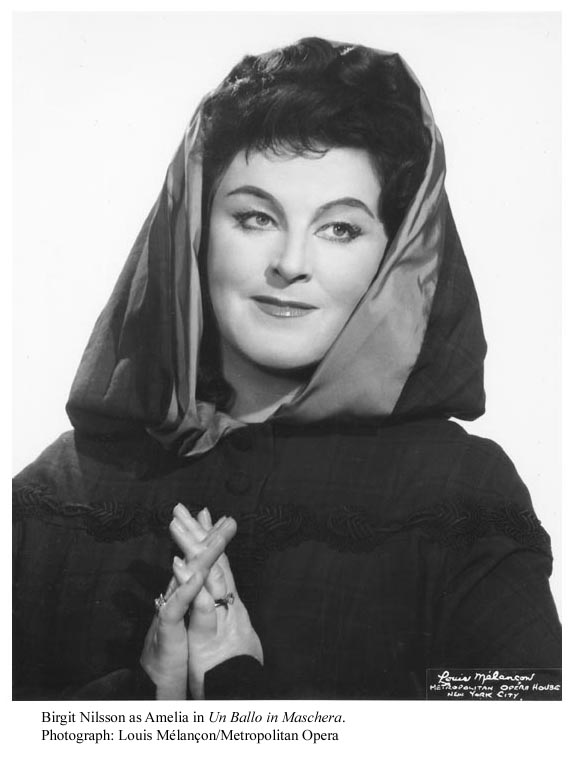
Mercredi 9 janvier 1963 : Un ballo in maschera. Opéra Metropolitan de New York. Santi. Birgit Nilsson (Amelia). Tucker. Merrill. Chookasian. Dobbs. Wilderman. Macurdy.
Review of Irving Kolodin in Saturday Review:
Birgit Nilsson singing her first Amelias at the Metropolitan, the better of the two operas Verdi combined under the title of "Un Ballo in Maschera" is now closer to its best self than at any time since the present production was introduced a year ago. "Ballo" II is the one that begins midway in Act II, when Amelia, striving desperately to act the faithful wife, finds herself scorned for infidelity, and Verdi's sympathy for humans in distress leaps from the pages.
To this pass of events Miss Nilsson brings the intelligence that makes her a fine Isolde and the vocal resource that makes her a great Turandot. But as she does not sing Puccini as she sings Wagner, neither does she sing Verdi as she sings either of the others. Hers is not by nature the limpid, soaring sound native to his needs, and she has a problem to surmount in moderating its volume, amending its timbre to the style and to the scoring. But, being an artistic singer as well as an intelligent and resourceful one, Miss Nilsson finds her way to an adjustment within a relatively short time, say, by the middle of her duet with Riccardo. Thereafter, and especially in the trio with Riccardo and Renato, and in the scene of Renato's discomfiture at her supposed duplicity (the laughter of the scornful conspirators makes them blood-brothers to the courtiers in "Rigoletto"), Miss Nilsson sustains just the attitude and accent of injured innocence to make Amelia, as she should be, the key figure in the life-and-death drama involving the king and his best friend, her husband. Furthermore, by simple care in arranging her costume and veil, she gives some credibility to the pretense that her husband is unaware of her identity until she reveals herself. This is much to accomplish in an operatic role and she is to be thanked for showing that it can be done.
Her closest partner in credibility as well as vocal excellence was Robert Merrill, long a fine-sounding Renato and now a believable one in action as well. The current state of Richard Tucker's Riccardo was observed on an earlier occasion this season, and might be summarized as a combination of the sublime (to the ear) and the ridiculous (to the eye). Nello Santi was again the conductor.
Samedi 12 janvier 1963 : Un ballo in maschera. Opéra Metropolitan de New York. Santi. Birgit Nilsson (Amelia). Tucker. Merrill. Madeira. Dobbs. Giaiotti. Macurdy.
Mardi 15 janvier 1963 : Un ballo in maschera. Opéra Metropolitan de New York. Santi. Birgit Nilsson (Amelia). Tucker. Sereni. Chookasian. Dobbs. Giaiotti. Vichey.
Vendredi 18 janvier 1963 : Aida. Opéra Metropolitan de New York. Santi. Birgit Nilsson (Aida). Thomas. Rankin. Guarrera. Giaiotti. Macurdy.
Mardi 22 janvier 1963 : Concert Philharmonic Hall, Manhattan, New York. André Kostelanetz / Birgit Nilsson : Ouverture du Carnaval romain (Berlioz), suite de Ma mère l’ oye (Ravel), Sono giunta… Madre, pietosa Vergine (Verdi - la forza del destino. Birgit Nilsson), Vissi d’ arte (Puccini. Tosca. Birgit Nilsson) Trois danses de El sombrero de tres picos (De Falla), New England Tryptich (Schuman), danse des sept voiles, scène finale (Strauss - Salomé. Birgit Nilsson).
Samedi 26 janvier 1963 : Fidelio. Opéra Metropolitan de New York. Bohm. Birgit Nilsson (Leonore). Vickers. Meredith. Wiemann. Rankin. Anthony. Flagello.
Mercredi 30 janvier 1963 : Turandot. Opéra Metropolitan de New York. Adler. Birgit Nilsson (Turandot). Tucker. Amara. Giaiotti. De Paolis.
Samedi 2 février 1963 : Turandot. Opéra Metropolitan de New York. Adler. Birgit Nilsson (Turandot). Tucker. Amara. Giaiotti. Velis.
Vendredi 8 février 1963 : Tristan und Isolde. Opéra Metropolitan de New York. Solti. Liebl. Birgit Nilsson (Isolde). Cassel. Dalis. Hines. Marsh.
Review of Everett Helm in the February 15, 1963 issue of Musical America
The first performance this season (February 8) at the Metropolitan Opera of Wagner's "Tristan and Isolde" was, on the one hand, a great, on the other, a harrowing, experience. On the very afternoon of the evening performance it was not certain whether Karl Liebl, suffering from a bad cold, would be able to sing at all in the part of Tristan. It is to Liebl's enormous credit that he appeared, for no other Tristan was available either in America or Europe.
Whether he was wise in so doing is a matter for speculation, for obviously he was suffering from ill health that affected his singing, Liebl is a fine singer and equally important, a fine artist. In his portrayal of Tristan he scrupulously avoided any posturing and theatrical gestures. In his whole attitude he was dignified and convincing. By husbanding his vocal resources he was able to finish out the evening. In the softer passages, notably in the duet "O sink hernieder" in Act II he gave a glimpse of what he can do when he is not ill.
Birgit Nilsson as Isolde gave a performance which words are inadequate to describe. She sang the taxing role with perfect ease and complete mastery, achieving perfection of line and phrasing and filling every note with meaning. Her understanding of the musical, dramatic and psychological implications of the part has in recent years deepened to such an extent that we have no hesitancy in comparing her to Flagstad in her prime. It may seem like quibbling if we suggest that she desist from the scarf-waving immediately preceding Tristan's entrance in Act II. If this is so, we choose to quibble, for this bit of "stage business" only detracts. We might also suggest that the lighting during this entire act is hideous-as is the stage set. But apparently no amount of protesting will alter the Met's "tradition" of staging-a very bad tradition indeed.
Lundi 11 février 1963 : Tristan und Isolde. Opéra Metropolitan de New York. Solti. Liebl. Birgit Nilsson (Isolde). Cassel. Dalis. Hines. Marsh.
Jeudi 14 février 1963 : Aida. Opéra Metropolitan de New York. Schick. Birgit Nilsson (Aida). Labo. Cvejic. Ruzdak. Flagello. Sgarro.
Dimanche 17 février 1963 : Turandot. Opéra Metropolitan de New York. Adler. Birgit Nilsson (Turandot). Corelli. Albanese. Giaiotti. De Paolis.
Samedi 23 février 1963 : Tristan und Isolde. Opéra Metropolitan de New York. Solti. Liebl. Birgit Nilsson (Isolde). Cassel. Dalis. Hines. Marsh.
Mardi 26 février 1963 : Turandot. Opéra Metropolitan de New York. Adler. Birgit Nilsson (Turandot). Labo. Amara. Flagello. De Paolis.
Vendredi 1 mars 1963 : Fidelio. Opéra Metropolitan de New York. Bohm. Birgit Nilsson (Leonore). Vickers. Cassel. Wiemann. Rankin. Anthony. Patterson.
Mercredi 6 mars 1963 : Fidelio. Opéra Metropolitan de New York. Bohm. Birgit Nilsson (Leonore). Vickers. Cassel. Wiemann. Hurley. Anthony. Patterson.
Samedi 9 mars 1963 : Tristan und Isolde. Opéra Metropolitan de New York. Rosenstock. Liebl. Birgit Nilsson (Isolde). Cassel. Dunn. Hines. Marsh.
Mardi 12 mars 1963 : Turandot. Opéra Metropolitan de New York. Adler. Birgit Nilsson (Turandot). Konya. Albanese. Wilderman. De Paolis.
Vendredi 15 mars 1963 : Un ballo in maschera. Opéra Metropolitan de New York. Schick. Birgit Nilsson (Amelia). Labo. Sereni. Resnik. Scovotti. Wilderman. Macurdy.
Jeudi 21 mars 1963 : Tristan und Isolde. Opéra Metropolitan de New York. Solti. Liebl. Birgit Nilsson (Isolde). Cassel. Dalis. Hines. Marsh.
Mercredi 10 avril 1963 : Tosca. Philadelphie. Moresco. Tagliavini. Birgit Nilsson (Floria Tosca). Ramon Vinay (Scarpia). Volta. Densen. Vellucci. Knetlar. Tagan. Harris.
Vendredi 19 avril 1963 : Récital Birgit Nilsson au Music Hall de Cincinnati (May Festival). Accompagnée au piano par Léo Taubman, elle chante des Lieder et des airs d'opéras.
Mercredi 15 mai 1963 : Die Walkure. Scala de Milan. Cluytens. Feiersinger. Van Mill. Hotter. Synek. Birgit Nilsson (Brunnhilde). Resnik.
Vendredi 17 mai 1963 : Die Walkure. Scala de Milan. Cluytens. Feiersinger. Van Mill. Hotter. Synek. Birgit Nilsson (Brunnhilde). Resnik.
Mercredi 22 mai 1963 : Siegfried. Scala de Milan. Cluytens. Hopf. Marschner. Neralic. Andersson. Van Mill. Siewert. Birgit Nilsson (Brunnhilde).
Vendredi 24 mai 1963 : Siegfried. Scala de Milan. Cluytens. Feiersinger. Marschner. Neralic. Andersson. Van Mill. Siewert. Birgit Nilsson (Brunnhilde).
Mardi 28 mai 1963 : Gotterdammerung. Scala de Milan. Cluytens. Hopf. Neralic. Andersson. Van Mill. Birgit Nilsson (Brunnhilde). Meyfarth. Resnik.
Vendredi 31 mai 1963 : Gotterdammerung. Scala de Milan. Cluytens. Hopf. Neralic. Andersson. Van Mill. Birgit Nilsson (Brunnhilde). Meyfarth. Resnik.
Jeudi 6 juin 1963 : Die Walkure. Opéra royal de Stockholm. Gielen. Hoiseth. Tyren. Bjorling. Nordmo-Lovberg. Birgit Nilsson (Brunnhilde). Meyer.
Dimanche 9 juin 1963 : Die Walkure. Staatsoper de Vienne. Karajan. Windgassen. Frick. Hotter. Rysanek. Birgit Nilsson (Brunnhilde). Rossel-Majdan.
Mercredi 12 juin 1963 : Siegfried. Staatsoper de Vienne. Karajan. Windgassen. Birgit Nilsson (Brunnhilde). Hotter. Pernerstorfer. Klein. Frick. Rossel-Majdan.
Samedi 15 juin 1963 : Gotterdammerung. Staatsoper de Vienne. Karajan. Windgassen. Birgit Nilsson (Brunnhilde). Brouwenstijn. Frick. Wiener. Pernerstorfer. Ludwig.
Mardi 18 juin 1963 : Turandot. Staatsoper de Vienne. Molinari-Pradelli. Birgit Nilsson (Turandot). Klein. Zaccaria. Prevedi. Price. Braun.
Jeudi 20 juin 1963 : Turandot. Staatsoper de Vienne. Molinari-Pradelli. Birgit Nilsson (Turandot). Klein. Zaccaria. Prevedi. Price. Pernerstorfer
.Dimanche 23 juin 1963 : Tristan und Isolde. Staatsoper de Vienne. Karajan. Beirer. Hotter. Birgit Nilsson (Isolde). Wiener. Braun. Rossel-Majdan.
Jeudi 27 juin 1963 : Récital au Théâtre des Champs Elysées à Paris. Birgit Nilsson, Giuseppe Patane : Wagner, Verdi, Puccini.
Lundi 1 juillet 1963 : Concert Scheveningen, Kursaal, Hollande. Pierre Monteux / Amsterdam Concertgebouw orchestra. Tannhauser (ouverture). Siegfried-Idyll. Tristan und Isolde (prélude et mort d'Isolde - Birgit Nilsson). Götterdämmerung (voyage de Siegfried sur le Rhin, marche funèbre, scène finale - Birgit Nilsson)
Vendredi 26 juillet 1963 : Tristan und Isolde. Festival de Bayreuth. Bohm. Windgassen. Greindl. Birgit Nilsson (Isolde). Neidlinger. Martell. Meyer.
Mercredi 7 août 1963 : Tristan und Isolde. Festival de Bayreuth. Bohm. Windgassen. Greindl. Birgit Nilsson (Isolde). Neidlinger. Martell. Meyer.
Samedi 10 aout 1963 : Tristan und Isolde. Festival de Bayreuth. Bohm. Windgassen. Greindl. Birgit Nilsson (Isolde). Neidlinger. Martell. Meyer.
Dimanche 25 aout 1963 : Die Walkure. Opéra royal de Stockholm. Gielen. Hoiseth. Tyren. Bjorling. Nordmo-Lovberg. Birgit Nilsson (Brunnhilde). Ericson.
Vendredi 6 septembre 1963 : BBC PROMS 42. Londres. Wagner One Hundred and fifteenth anniversary (150) : Lever du jour et voyage de Siegfried sur le Rhin. Acte III (Die Gotterdammerung). Prélude et mort d’ Isolde (Tristan und Isolde). Georg Solti / Wolfgang Windgassen, Marie Collier, Thomas Stewart, Gottlob Frick.
Mercredi 11 septembre 1963 : Gotterdammerung. Royal Opera House Covent Garden. Solti. Birgit Nilsson (Brunnhilde). Windgassen. Stewart. Frick. Collier. Veasey. Kraus.
Samedi 14 septembre 1963 : Gotterdammerung. Royal Opera House Covent Garden. Solti. Birgit Nilsson (Brunnhilde). Windgassen. Stewart. Frick. Collier. Veasey. Kraus.
Lundi 16 septembre 1963 : Gotterdammerung. Royal Opera House Covent Garden. Solti. Birgit Nilsson (Brunnhilde). Windgassen. Stewart. Frick. Collier. Veasey. Kraus.
Jeudi 19 septembre 1963 : Gotterdammerung. Royal Opera House Covent Garden. Solti. Birgit Nilsson (Brunnhilde). Windgassen. Stewart. Frick. Collier. Veasey. Kraus.
Lundi 14 octobre 1963 : Aida. Opéra Metropolitan de New York. Solti. Birgit Nilsson (Aida). Bergonzi. Dalis. Sereni. Tozzi. Macurdy.
Review of Jay Harrison in the November 1963 issue of Musical America
The Metropolitan Opera's 79th season began on October 14 with a twofold spectacle-one off stage and one on. As to the former, the house was filled with chinchillas and tiaras and clothes of every describable texture and color, while accounting for the latter was a new production of Verdi's "Aida" conducted by Georg Solti and featuring Birgit Nilsson, as the heroine; Carlo Bergonzi, as Radames; Irene Dalis, as Amneris; Giorgio Tozzi, as Ramfis; and Mario Sereni, as Amonasro. Lesser roles were undertaken by John Macurdy, as the King; Robert Nagy, as a messenger; and Mary Ellen Pracht, as a priestess.
The first question that arises is whether or not the current "Aida" surpasses its previous incarnation at the Met. The answer to this is simple, for indeed it does, though in a very curious way. While the previous "Aida" was rather paltry and lacking in glamour, what we have now is a sumptuous production straight out of Hollywood. Cecil B. De Mille is its godfather, and every scene is guided-in sets, costumes and action-by the ghost of Mr. Dc Mille's exotic spectaculars. The Met's new "Aida" is massive, busy, everywhere grand and not a shade brainless. In mounting the work, Nathaniel Merrill has concentrated on all things lavish, even to the point that in the simple Nile Scene he and the designer, Robert O'Hearn, have seen fit to include at stage left a mountain which might satisfy even devotees of "The Ring."
In other words, nothing is left to the imagination so far as pomp and pageantry arc concerned. The whole production was clearly devised to be grand and glorious, as much of it is, the only exception being the Entombment Scene, which appears to be taking place in an abandoned mine shaft. Especially striking are the colors used throughout the production, which tend toward browns and are set off by the whole complement of shades which make browns glow like amber. Understand, there is nothing original to all this: the new "Aida" is new in name only. All its visual effects are old-hat and have been seen on countless other occasions. But there is a certain majesty to it, an opulence of design, if you will, that no other company in America is capable of producing.
Much the same can he said of Mr. Merrill's direction. It is standard, forthright and admits of no avant-garde monkeyshines. Every artist does precisely what you would expect him to do under the circumstances and, while there is no show of imagination, there is nothing either that touches on had taste. It is all very proper and calculated and, in the final analysis, a mite dull. Even the Triumphal Scene, with all its hundreds crammed onto the stage, is not overpowering; it is impressive, yes, but does not make the senses totter.
As to the singing, it too, was only a shade above the conventional. Miss Nilsson, rumor had it, was ailing, which may have been responsible for some unfocused tones that in the case of "O Patria Mia" became severely marked. Besides, she is a rather cold, detached Aida - she walks through the part with outlandish, silent-film gestures and rarely seems to get involved with the other characters who control her destiny. She is, in short, a puppet whose strings have got tangled.
Carlo Bergonzi, the Radames of the evening, is not an heroic tenor, which, unfortunately, made him seem somewhat lightweight for the role. His "Celeste Aida," for example, was notable for its lyric warmth, but the "ring," the brazenness the part requires was never a part of his performance. There is no question that his tenor is lovely-elegant, in fact. But we expect a Radames to be braver, more triumphant in his singing.
Samedi 19 octobre 1963 : Aida. Opéra Metropolitan de New York. Solti. Birgit Nilsson (Aida). Bergonzi. Dalis. Sereni. Tozzi. Macurdy.
Mardi 22 octobre 1963 : Aida. Opéra Metropolitan de New York. Solti. Birgit Nilsson (Aida). Bergonzi. Dalis. Sereni. Tozzi. Macurdy.
Jeudi 24 octobre 1963 : Der fliegende Hollander. Philadelphie. Karp. Moscona. Crain. Lehner. Vinay. Nilsson.
Lundi 4 novembre 1963 : Aida. Opéra Metropolitan de New York. Solti. Birgit Nilsson (Aida). Bergonzi. Dalis. Guarrera. Tozzi. Macurdy.
Dimanche 10 novembre 1963 : Aida. Opéra Metropolitan de New York. Solti. Birgit Nilsson (Aida). Bergonzi. Dalis. McNeil. Hines. Macurdy.
Jeudi 14 novembre 1963 : Gotterdammerung. Opéra Metropolitan de New York. Rosenstock. Birgit Nilsson (Brunnhilde). Hopf. Mittelmann. Curtis-Verna. Wiemann. Dalis. Pechner.
Review of Irving Kolodin in the Saturday Review
Reiner-less "Götterdämmerung"
Relative even to the other works of the Ring, "Götterdämmerung" is a massive test of stagecraft, musical skills, and organizational effort. Though we see it now as the summary of its predecessors, it was, of course, conceived as a saga in itself, a creation of accents and emphases carefully calculated to work against each other. Hagen's black villainy and Gunther's blind trust, Brüinnhilde's deception and Waltraute's despair, Siegfried's gullibility and Gutrune's innocence - all are shadings of a canvas on a heroic scale. In its first presentation at the Metropolitan this year, the accents and emphases were pretty much blurred together, so that Birgit Nilsson's Brünnhilde stood out as a single vivid figure in the foreground.
Possibly if Fritz Reiner had lived to see through the last task of his productive life (the preparatory effort sent him to a hospital with pneumonia, to which he succumbed within a week), there would have been drama and conflict in the interaction of the great conductor and the great singer. But it would hardly be rational to blame his emergency replacement, Joseph Rosenstock, who had stage rehearsals for the second and third acts and only an orchestral session for the first, for Hans Hopf's tight voice for Siegfried, Ernst Wiemann's inadequate range for Hagen, and the insufficiently bright sound of Mary Curtis-Verna for Gutrune. Rather than accents and emphases, they were varying shades of gray.
As a result, rather than being a music drama, in the Wagnerian sense, this Götterdämmerung was downgraded to the status of opera, with a star part for Miss Nilsson. The voice was not quite "awake" for the [first] scene with Siegfried (she is adverse to prolonged vocalization prior to so long a stint as this Brünnhilde). However, by the second act it was yielding a brightness and intensity that gave the denunciation of Siegfried's treachery and Brüinnhilde's participation in the plot of Hagen a high place in the Nilsson repertory. The tonal penetration that makes her an impressive Turandot strikes sparks against the outcry of the orchestra, with an aural splendor that eluded such recent paragons of the part as Flagstad and Traubel. She has also improved her action so that it mounts in impact up to and including the Immolation Scene.
Mardi 19 novembre 1963 : Aida. Opéra Metropolitan de New York. Solti. Birgit Nilsson (Aida). Bergonzi. Gorr. Sereni. Siepi. Macurdy.
Mardi 26 novembre 1963 : Aida. Opéra Metropolitan de New York. Solti. Birgit Nilsson (Aida). Bergonzi. Gorr. Sereni. Giaiotti. Macurdy.
Samedi 30 novembre 1963 : Tristan und Isolde. Opéra Metropolitan de New York. Prêtre. Parly. Birgit Nilsson (Isolde). Dalis. Cassel. Wiemann. Bottcher.
Mercredi 4 décembre 1963 : Gotterdammerung. Opéra Metropolitan de New York. Rosenstock. Birgit Nilsson (Brunnhilde). Hopf. Cassel. Yeend. Ernster. Gorr. Davidson.
Samedi 14 décembre 1963 : Gotterdammerung. Opéra Metropolitan de New York. Rosenstock. Birgit Nilsson (Brunnhilde). Hopf. Mittelmann. Curtis-Verna. Wiemann. Dunn. Pechner.
Mercredi 18 décembre 1963 : Die Walkure. Staatsoper de Vienne. Prohaska. Kozub. Kreppel. Wiener. Zadek. Birgit Nilsson (Brunnhilde). Hoffman..
Vendredi 20 décembre 1963 : Der fliegende Hollander. Staatsoper de Vienne. Prohaska. Bohme. Birgit Nilsson (Senta). Uhl. Hoengen. Dermota. Hotter.
1960-1969
1964
Dimanche 5 janvier 1964 : Aida. Opéra royal de Stockholm. Westerberg. Rundgren. Ericson. Birgit Nilsson (Aida). Hoiseth. Tyren. Saeden.
Samedi 11 janvier 1964 : Aida. Opéra royal de Stockholm. Westerberg. Rundgren. Ericson. Birgit Nilsson (Aida). Hoiseth. Tyren. Bjorling.
Mercredi 22 janvier 1964 : Aida. Staatsoper Vienne. Ludwig. Welter. Little. Birgit Nilsson (Aida). Uzunov. Zaccaria. Montefusco.
Vendredi 24 janvier 1964 : Turandot. Staatsoper Vienne. Klobucar. Birgit Nilsson (Turandot). Klein. Zaccaria. Zampieri. Gueden. Braun.
Vendredi 14 février 1964. Macbeth. Scala de Milan. Scherchen. Guelfi. Vinco. Birgit Nilsson (Lady Macbeth). Prevedi. Merighi.
Lundi 17 février 1964 : Macbeth. Scala de Milan. Scherchen. Guelfi. Vinco. Birgit Nilsson (Lady Macbeth). Prevedi. Merighi.
Jeudi 20 février 1964 : Macbeth. Scala de Milan. Scherchen. Guelfi. Vinco. Birgit Nilsson (Lady Macbeth). Prevedi. Merighi.
Dimanche 23 février 1964 : Macbeth. Scala de Milan. Scherchen. Guelfi. Vinco. Birgit Nilsson (Lady Macbeth). Prevedi. Merighi.
Lundi 2 mars au mercredi 17 juin 1964 : Fidelio. Sofiensaal Vienne. Maazel. McCracken. Birgit Nilsson (Léonore). Krause. Bohme. Sciutti. Grobe. Prey.
Jeudi 19 mars 1964 : Macbeth. Metropolitan Opera New York. Santi. McNeil. Birgit Nilsson (Lady Macbeth). Hines. Shirley. Ghitti.
Review of John Ardoin in Musical America
The Met has restored the brief scene outside the Witches' Cave at the end of Act III between Macbeth and his Lady (not seen since '58-'59) and omitted the ballet music which was used to bridge Act III and the first scene of Act IV. This year, as in '61-'62, Mac苑eth is allowed to do battle with Macduff and not left to die alone on the stage. It is too late in the game to carp further about the chalky, expressionistic sets and costumes of the late Caspar Neher, and some of the oratorio staging in the production. Both were as distract虹ng and distressing as ever.
The focal point of the evening was Birgit Nilsson. The demanding role of Lady Macbeth brought the soprano her first fame back in '47 when she made her debut with the Royal Opera in Stockholm. After this she shelved the role, returning to it only early this year for appearances at La Scala. It would be foolish to say that the role is easy for Miss Nilsson, but it can be said that she made the role sound easy and here虹n lay the rub. She sailed through the part without creating a sense of tension or thrust and without savoring the mar赳elous Verdian lines (she was also downright stingy with her top notes in the first-act aria). It was vocalizing of Miss Nilsson's accustomed high order, but it was far from the malevolent, dark sounds Verdi wished. She tried to make a stronger point with the Sleepwalking Scene with assorted grimaces and gur茆les, but this attempt at vocal acting was more awkward than organic. Surprisingly there were numerous pitch problems in this important scene which one does not normally associate with Miss Nilsson. To merely sing Lady Mac苑eth is not enough, and the inescapable impression Miss Nilsson created was one of boredom.
Lundi 23 mars 1964 : Macbeth. Metropolitan Opera New York. Santi. McNeil. Birgit Nilsson (Lady Macbeth). Hines. Shirley. Ghitti.
Mardi 14 avril 1964 : Aida. Boston. Varviso. Birgit Nilsson (Aida). Thomas. Gorr. McNeil. Tozzi. Diaz.
Samedi 18 avril 1964 : Tosca. Boston. Cleva. Corelli. Birgit Nilsson (Floria Tosca). London.
Mardi 21 avril 1964 : Aida. Cleveland. Varviso. Birgit Nilsson (Aida). Corelli. Gorr. McNeil. Siepi. Diaz.
Mardi 28 avril 1964 : Macbeth. Metropolitan Opera New York. Santi. McNeil. Birgit Nilsson (Lady Macbeth). Tozzi. Bergonzi. Ghitti.
Vendredi 1 mai 1964 : Aida. Metropolitan Opera de New York. Varviso. Birgit Nilsson (Aida). Corelli. Dalis. McNeil. Flagello. Diaz.
Mercredi 6 mai 1964 : Aida. Metropolitan Opera de New York. Varviso. Birgit Nilsson (Aida). Thomas. Gorr. McNeil. Hines. Diaz.
Lundi 11 mai 1964 : Aida. Atlanta, Fox Theater. Varviso. Konya. Birgit Nilsson (Aida). Gorr. McNeil. Flagello. Macurdy.
Dimanche 31 mai 1964 : Aida. Opéra royal de Stockholm. Savini. Rundgren. Ericson. Birgit Nilsson (Aida). Hoiseth. Tyren. Saeden.
Mercredi 10 juin 1964 : Aida. Opéra royal de Stockholm. Savini. Rundgren. Ericson. Birgit Nilsson (Aida). Hoiseth. Tyren. Bjorling.
Lundi 15 juin 1964 : Tristan und Isolde. Staatsoper Vienne. Bohm. Windgassen. Frick. Birgit Nilsson (Isolde). Wiener. Braun. Rossel-Majdan.
Vendredi 19 juin 1964 : Turandot. Staatsoper Vienne. Santi. Birgit Nilsson (Turandot). Klein. Zaccaria. Konya. Freni. Braun.
Lundi 22 juin 1964 : Der fliegende Hollander. Staatsoper Vienne. Krips. Kreppel. Birgit Nilsson (Senta). Geisler. Rossel-Majdan. Terkal. Wiener.
Mercredi 24 juin 1964 : Die Walkure. Staatsoper Vienne. Karajan. Beirer. Kreppel. Hoffmann. Watson. Birgit Nilsson (Brunnhilde). Rossel-Majdan.
Samedi 18 juillet 1964 : Tristan und Isolde. Festival de Bayreuth. Bohm. Windgassen. Birgit Nilsson (Isolde). Meyer. Neidlinger. Hotter. Moller.
Mardi 4 août 1964 : Tristan und Isolde. Festival de Bayreuth. Bohm. Windgassen. Birgit Nilsson (Isolde). Meyer. Neidlinger. Hotter. Moller.
Mercredi 12 août 1964 : Tristan und Isolde. Festival de Bayreuth. Bohm. Windgassen. Birgit Nilsson (Isolde). Meyer. Neidlinger. Hotter. Moller.
Samedi 5 septembre 1964 : Turandot. Scala de Milan en tournée au théâtre Bolchoi de Moscou. Gavazzeni. Birgit Nilsson (Turandot). Gullino. Zaccaria. Prevedi. Freni.
Mardi 8 septembre 1964 : Turandot. Scala de Milan en tournée au théâtre Bolchoi de Moscou. Gavazzeni. Birgit Nilsson (Turandot). Gullino. Zaccaria. Prevedi. Freni.
Vendredi 11 septembre 1964 : Turandot. Scala de Milan en tournée au théâtre Bolchoi de Moscou. Gavazzeni. Birgit Nilsson (Turandot). Gullino. Zaccaria. Prevedi. Freni.
Lundi 14 septembre 1964 : Turandot. Scala de Milan en tournée au théâtre Bolchoi de Moscou. Gavazzeni. Birgit Nilsson (Turandot). Gullino. Zaccaria. Prevedi. Tucci.
Samedi 19 septembre 1964 : Die Walkure. Staatsoper Vienne. Wallberg. Beirer. Bohme. Wiener. Rysanek. Birgit Nilsson (Brunnhilde). Rossel-Majdan.
Mardi 22 septembre 1964 : Fidelio. Staatsoper Vienne. Skrowaczewski. Beirer. Birgit Nilsson (Leonore). Bohme. Wiener. Kreppel. Steffek. Kmentt.
Lundi 28 septembre 1964 : Tosca. Opéra royal de Stockholm. Cleva. Birgit Nilsson (Floria Tosca). Ulfung. Saeden.
Mardi 13 octobre 1964 : Fidelio. San Francisco. Ludwig. Peterson. Venora. Foldi. Birgit Nilsson (Leonore). Evans. Vickers. Ludgin.
Samedi 17 octobre 1964 : Fidelio. San Francisco. Ludwig. Peterson. Venora. Foldi. Birgit Nilsson (Leonore). Evans. Vickers. Ludgin.
Mardi 20 octobre 1964 : Turandot. San Francisco. Molinari-Pradelli. West. Tagliavini. Lorengar. Tozzi. Fried. Birgit Nilsson (Turandot).
Jeudi 22 octobre 1964 : Turandot. San Francisco. Molinari-Pradelli. West. Tagliavini. Lorengar. Tozzi. Fried. Birgit Nilsson (Turandot).
Dimanche 25 octobre 1964 : Turandot. San Francisco. Molinari-Pradelli. West. Tagliavini. Lorengar. Tozzi. Fried. Birgit Nilsson (Turandot).
Vendredi 6 novembre 1964 : Turandot. Los Angeles. Molinari-Pradelli. West. Tagliavini. Lorengar. Tozzi. Fried. Birgit Nilsson (Turandot).
Lundi 9 novembre 1964 : Fidelio. Los Angeles. Ludwig. Peterson. Venora. Foldi. Birgit Nilsson (Leonore). Evans. Vickers. Ludgin.
Mercredi 11 novembre 1964 : Turandot. Los Angeles. Molinari-Pradelli. West. Tagliavini. Lorengar. Tozzi. Fried. Birgit Nilsson (Turandot).
Samedi 28 novembre 1964 : Tristan und Isolde. Staatsoper Vienne. Klobucar. Windgassen. Hotter. Birgit Nilsson (Isolde). Imdahl. Braun. Cvejic.
Lundi 30 novembre 1964 : Fidelio. Staatsoper Vienne. Maazel. Windgassen. Birgit Nilsson (Leonore). Welter. Berry. Frick. Muszely. Unger.
Lundi 7 décembre 1964 : Turandot. Scala de Milan. Gavazzeni. Birgit Nilsson (Turandot). Mercuriali. Zaccaria. Corelli. Vichnievskaia. Capecchi. De Palma. Ricciardi. Carbonari.
Jeudi 10 décembre 1964 : Turandot. Scala de Milan. Gavazzeni. Birgit Nilsson (Turandot). Mercuriali. Zaccaria. Corelli. Vichnievskaia.
Samedi 12 décembre 1964 : Turandot. Scala de Milan. Gavazzeni. Birgit Nilsson (Turandot). Mercuriali. Zaccaria. Corelli. Vichnievskaia.
Mardi 15 décembre 1964 : Turandot. Scala de Milan. Gavazzeni. Birgit Nilsson (Turandot). Mercuriali. Zaccaria. Corelli. Vichnievskaia.
Lundi 21 décembre 1964 : Tristan und Isolde. Scala de Milan. Maazel. Windgassen. Birgit Nilsson (Isolde). Crass. Neidlinger. Corradi. Gorr.
Mardi 29 décembre 1964 : Tristan und Isolde. Scala de Milan. Maazel. Windgassen. Birgit Nilsson (Isolde). Crass. Neidlinger. Corradi. Gorr.
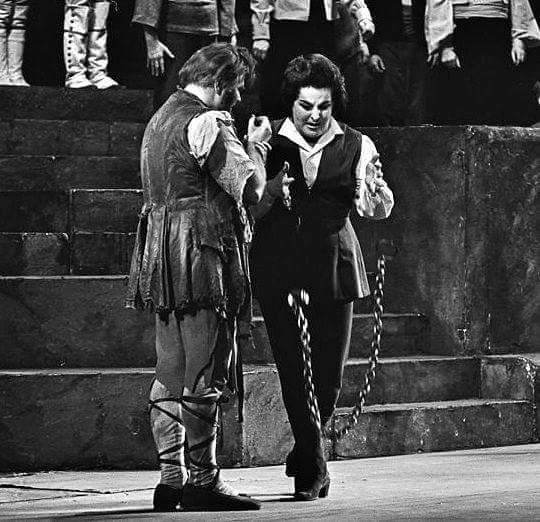
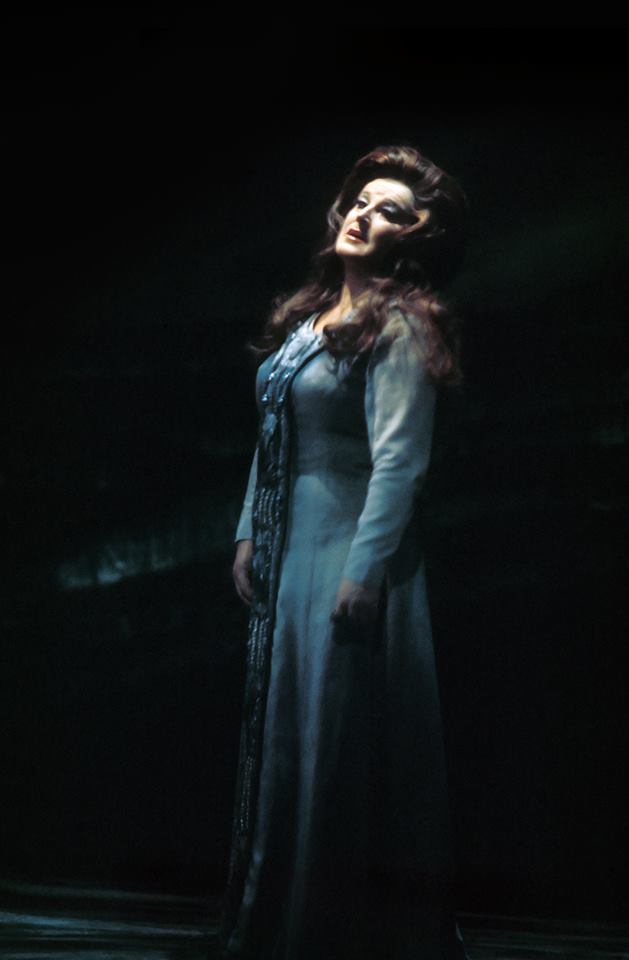
1960-1969
1965
Samedi 2 janvier 1965 : Tristan und Isolde. Scala de Milan. Maazel. Windgassen. Birgit Nilsson (Isolde). Crass. Neidlinger. Corradi. Gorr.
Mardi 5 janvier 1965 : Tristan und Isolde. Scala de Milan. Maazel. Windgassen. Birgit Nilsson (Isolde). Crass. Neidlinger. Corradi. Gorr.
Jeudi 7 janvier 1965 : Turandot. Scala de Milan. Gavazzeni. Birgit Nilsson (Turandot). Mercuriali. Mazzoli. Corelli. Freni.
Mercredi 13 janvier 1965 : Turandot. Metropolitan Opera de New York. Cleva. Birgit Nilsson (Turandot). Thomas. Amara. Giaiotti. Caruso.
Review of Irving Kolodin in the January 30, 1965 issue of the Saturday Review
Nilsson
Puccini's "Turandot" made a welcome return to the Metropolitan's repertory in mid-January, not only for the visual distinctions of Cecil Beaton's colorful decor, but because it brought a promise of Wagner and Strauss to come. That is to say, the return of Birgit Nilsson, whose vocal quality was prime, her command of Puccini's relentlessly demanding writing as effortless and compelling as ever. Rather than being the homogeneous part of a satisfying whole she was when the production was first directed by Leopold Stokowski in 1960, Miss Nilsson - through no fault of her own - was the radiant light of an otherwise clouded panorama. Jess Thomas's first Calaf was creditable to the American tenor's artistic purposes, but without the ringing vibrance or the stylistic sense to suit the circumstance. He looked well, walked well, tried hard; this is not a Puccini voice. Fausto Cleva's conducting was possibly more of a comfort for the singers than Stokowski's had been, but the electric charge his predecessor generated was conspicuously absent.
Samedi 16 janvier 1965 : Turandot. Metropolitan Opera de New York. Cleva. Birgit Nilsson (Turandot). Thomas. Amara. Giaiotti. Caruso.
Vendredi 22 janvier 1965 : Turandot. Metropolitan Opera de New York. Cleva. Birgit Nilsson (Turandot). Thomas. Stratas. Giaiotti. Caruso.
Mercredi 3 février 1965 : Salomé. Metropolitan Opera de New York. Bohm. Birgit Nilsson (Salomé). Liebl. Dalis. Dooley. Alexander.
Review of Winthrop Sargeant in New Yorker of February 13, 1965
Despite forebodings in some minds, including mine, that our leading Brünnhilde might not make the ideal Salome, Birgit Nilsson's appearance in the title role of Richard Strauss's shocker at the Metropolitan on Wednesday evening of last week was a total triumph. I have never heard the role so magnificently sung. What surprised me, though, was that I have seldom seen it so magnificently acted. With canny theatrical craftsmanship, Miss Nilsson did all the right things. She encased herself in a black leotard and put on a rather flamboyant black wig that minimized the natural squareness of her face. Actually, she looked quite seductive, in a sultry way, and the manner in which she moved about the stage was always graceful. As for the famous Dance of the Seven Veils, it was done as tastefully and convincingly as circumstances permitted. After all, how many full-voiced dramatic sopranos heave really brought off this dance in such a way as to give the illusion of teen-age agility?
...Carefully coached by Alicia Markova, she limited herself to a few bodily twists and shakes, a little rolling on the floor, and a certain amount of waving of two or three, rather than seven, veils. There was not strip-tease effect. During this dance, she had on a black gown, which revealed only the sides of her legs, and she wound up as fully dressed as she started. Nevertheless, there was the distinct illusion that she was bent on seducing Herod and that she had the allure to do it. Maybe clothes make the woman, after all. Preceding and following the dance, the Nilsson voice rang through the auditorium like a thrust of steel, piercing Strauss's heavy orchestration with an ease that was almost casual, except at points like those moments of quiet ecstasy when she was crooning over the head on the platter.
This was a great "Salome" in other respects too. Karl Böhm, in the orchestra pit, brought out and clarified every detail of the score in a way that what often sounds muddy and incoherent became beautiful. Karl Liebl was one of the most impressive Herods I have encountered. Irene Dalis, as Herodias, acted a bit like a Westchester housewife but sang well. I have heard louder Jochanaans that William Dooley, but his singing had subtlety and style. John Alexander was about as fine a Narraboth as you will ever come across, and the minor roles were all well taken.
Mardi 9 février 1965 : Salomé. Metropolitan Opera de New York. Bohm. Birgit Nilsson (Salomé). Liebl. Dalis. Cassel. Alexander.
Dimanche 14 février 1965 : Turandot. Metropolitan Opera de New York. Cleva. Birgit Nilsson (Turandot). Corelli. Albanese. Giaiotti. Caruso.
Lundi 22 février 1965 : Die Walkure. Metropolitan Opera de New York. Steinberg. Birgit Nilsson (Brunnhilde). Vickers. Rysanek. London. Dalis. Ward.
Review of Irving Kolodin in the March 13, 1965 issue of the Saturday Review
"Walküre"
William Steinberg's first venture as a Wagner conductor at the Metropolitan coincided with the first performance of "Die Walküre" in three seasons. Presumably this should have provided him with more opportunity to evolve a personal treatment of the work than was the case with "Aida," in which he made his debut there several weeks ago. If the understated, rather anemic sound that emerged from the pit was truly representative of his desires, the estimate of his capacities as an opera conductor will have to be revised.
By comparison with some conductors who have found a pace and momentum for the first act that leads it in an uninterrupted surge from curtain rise to curtain fall, Steinberg's treatment rendered it episodic and nonconsecutive. Such purpose and momentum might have swept aside some momentary shortcomings of his Sieglinde (Leonie Rysanek) and Siegmund (Jon Vickers), but what Steinberg had to offer was slowed and impeded by every obstacle, such as Miss Rysanek's inability to sustain the pitch or Vickers' incapacity to mold his powerful sound into an instrument of ardor or tenderness. Least Wagnerian of the trio was David Ward, whose Hunding had neither the darkness of voice nor the intensity of purpose to make this character properly intimidating. Indeed, so broad-shouldered a Siegmund as Vickers could have taken him on in hand-to-hand combat without the desperate clamor he raised about being "weaponless."
By comparison, George London's first Wotan in this work (he has performed here previously in both Rheingold and Siegfried) was a model of authority, purpose, and dramatic understanding. He not only had the stature for the part, but also a command of the suitable posture and stance for each episode as it presented itself. Playing the role with a lock over one eye and without the traditional helmet left London looking more than a little youthful for his status as the father of virtually everybody in the cast but Hunding and Fricka, but he doubtless believes in accelerated development. He did convey a decision at variance with the youthful appearance and a compassion beyond his visible years.
Vocally London was more at ease with the declamation and drama of the role than he was with its lyricism. It is rare to hear the text delivered with so much clarity, or the colloquy with Fricka so well sustained. The monologue of Act II is a little low for him, as some of the Es and Fs of the third act are high, but I found the dramatic line impressively sustained to a proper climax in the farewell. In the aggregate, as a first-time effort, this was not merely full-fashioned to the needs of the character, but a testimonial to thoroughgoing preparation at the source (Bayreuth).
In the half-dozen years since Birgit Nilsson sang her first Metropolitan Brünnhilde she has grown from a performer of quality to an artist of the first quality. As of 1959, she was very much the youthful daughter dependent on her godfather for strength and guidance. Now, it is clear, she is portraying a Brünnhilde with her own sense of destiny, imbued with a life force that will sustain her beyond the paternal protection. This Miss Nilsson makes clear not only in her powerful but well-shaded singing of Brünuhilde's music, which begins in rejoicing and ends in resignation but is never less than triumphant, but also in her appealing visualization of the role. Dalis outdid herself this time with a spiteful Fricka, and the Valkyries included Mignon Dunn, Helen Vanni, Janis Martin, Joann Grillo, Gladys Kriese, and a new singer, Beverly Bower) were individually and collectively better-sounding than such groups usually are.
Samedi 27 février 1965 : Salomé. Metropolitan Opera de New York. Bohm. Birgit Nilsson (Salomé). Liebl. Dalis. Cassel. Shirley.
Samedi 6 mars 1965 : Die Walkure. Metropolitan Opera de New York. Steinberg. Birgit Nilsson (Brunnhilde). Vickers. Rysanek. London. Dalis. Ward.
Mardi 9 mars 1965 : Die Walkure. Metropolitan Opera de New York. Steinberg. Birgit Nilsson (Brunnhilde). Vickers. Rysanek. London. Dalis. Ward.
Samedi 13 mars 1965 : Salomé. Metropolitan Opera de New York. Bohm. Birgit Nilsson (Salomé). Liebl. Dalis. Cassel. Shirley.
Mardi 16 mars 1965 : Salomé. Metropolitan Opera de New York. Bohm. Birgit Nilsson (Salomé). Liebl. Dalis. Dooley. Shirley.
Samedi 20 mars 1965 : Aida. Metropolitan Opera de New York. Steinberg. Birgit Nilsson (Aida). Tucker. Cernei. McNeil. Tozzi. Sgarro.
Jeudi 25 mars 1965 : Dans le cadre du centenaire de TRISTAN UND ISOLDE, l' Opéra de Paris annonce son intention de monter cette oeuvre avec Birgit Nilsson dans le rôle-titre.
Dimanche 28 mars 1965 : Aida. Metropolitan Opera de New York. Steinberg. Birgit Nilsson (Aida). Corelli. Elias. Sereni. Siepi. Scott.
Vendredi 2 avril 1965 : Die Walkure. Metropolitan Opera de New York. Steinberg. Birgit Nilsson (Brunnhilde). Vickers. Kuchta. Hines. Dunn. Wiemann.
Samedi 17 avril 1965 : Tosca. Opéra royal de Stockholm. Savini. Birgit Nilsson (Floria Tosca). Ulfung. Bjorling.
Lundi 19 avril 1965 : Tosca. Opéra royal de Stockholm. Savini. Birgit Nilsson (Floria Tosca). Ulfung. Bjorling.
Vendredi 30 avril 1965 : Aida. Opéra de Caracas. Guadagno. Birgit Nilsson (Aida). Vickers. MacNeil. Hines. Ghiuselev. de Cesare. Morelli.
Mardi 4 mai 1965 : Tristan und Isolde. Opéra de Caracas. Suitner. Thomas. Nilsson. Dalis. Roar. Tozzi. Knetlar.
Vendredi 7 mai 1965 : Tannhauser. Opéra de Caracas. Suitner. Birgit Nilsson (Vénus / Elisabeth). Hines. Parly. Stewart.
Vendredi 14 mai 1965 : Elektra. Opéra royal de Stockholm. Klobucar. Ericson. Birgit Nilsson (Elektra). Lindholm. Jehrlander. Saeden.
Lundi 17 mai 1965 : Elektra. Opéra royal de Stockholm. Klobucar. Ericson. Birgit Nilsson (Elektra). Lindholm. Jehrlander. Saeden.
Jeudi 20 mai 1965 : Elektra. Opéra royal de Stockholm. Klobucar. Ericson. Birgit Nilsson (Elektra). Lindholm. Jehrlander. Saeden.
Mercredi 26 mai 1965 : Elektra. Opéra royal de Stockholm. Klobucar. Ericson. Birgit Nilsson (Elektra). Lindholm. Jehrlander. Saeden.
Samedi 12 juin 1965 : Fidelio. Munich Prinzregentheater. Birgit Nilsson (Leonore)
Lundi 26 juillet 1965 : Die Walkure. Festival de Bayreuth. Bohm. King. Talvela. Adam. Birgit Nilsson (Brunnhilde). Rysanek. Boese.
Mercredi 28 juillet 1965 : Siegfried. Festival de Bayreuth. Bohm. Windgassen. Birgit Nilsson (Brunnhilde). Wohlfahrt. Greindl. Neidlinger. Bohme. Chookasian.
Vendredi 30 juillet 1965 : Gotterdammerung. Festival de Bayreuth. Bohm. Windgassen. Birgit Nilsson (Brunnhilde). Stewart. Dvorakova. Greindl. Meyer. Neidlinger.
Samedi 14 août 1965 : Die Walkure. Festival de Bayreuth. Bohm. King. Talvela. Adam. Birgit Nilsson (Brunnhilde). Rysanek. Boese.
Lundi 16 août 1965 : Siegfried. Festival de Bayreuth. Bohm. Windgassen. Birgit Nilsson (Brunnhilde). Wohlfahrt. Greindl. Neidlinger. Bohme. Chookasian.
Mercredi 18 août 1965 : Gotterdammerung. Festival de Bayreuth. Bohm. Windgassen. Birgit Nilsson (Brunnhilde). Stewart. Dvorakova. Greindl. Meyer. Neidlinger.
Vendredi 3 septembre 1965 : Turandot. Teatro Colon Buenos Aires. Previtali. Birgit Nilsson / Gladys Kuchta (Turandot). Pasini. De Narke / Algorta. Uzunov. Caballe.
Dimanche 5 septembre 1965 : Turandot. Teatro Colon Buenos Aires. Previtali. Birgit Nilsson / Gladys Kuchta (Turandot). Pasini. De Narke / Algorta. Uzunov. Caballe.
Mercredi 8 septembre 1965 : Turandot. Teatro Colon Buenos Aires. Previtali. Birgit Nilsson (Turandot). Pasini. De Narke / Algorta. Uzunov. Caballe.
Samedi 11 septembre 1965 : Turandot. Teatro Colon Buenos Aires. Previtali. Birgit Nilsson / Gladys Kuchta (Turandot). Pasini. De Narke / Algorta. Uzunov. Caballe.
Mardi 14 septembre 1965 : Turandot. Teatro Colon Buenos Aires. Previtali. Birgit Nilsson / Gladys Kuchta (Turandot). Pasini. De Narke / Algorta. Uzunov. Caballe.
Jeudi 16 septembre 1965 : Salomé. Teatro Colon Buenos Aires. Sebastian / Kinsky. Uhl. Hoffman. Birgit Nilsson (Salomé). Waechter / Noecker. Sassola.
Dimanche 19 septembre 1965 : Salomé. Teatro Colon Buenos Aires. Sebastian / Kinsky. Uhl. Hoffman. Birgit Nilsson (Salomé). Waechter / Noecker. Sassola.
Mardi 21 septembre 1965 : Salomé. Teatro Colon Buenos Aires. Sebastian. Birgit Nilsson (Salomé). Wachter. Uhl. Hoffman. Sassola.
Samedi 25 septembre 1965 : Salomé. Teatro Colon Buenos Aires. Sebastian / Kinsky. Uhl. Hoffman. Birgit Nilsson (Salomé). Waechter / Noecker. Sassola.
Mardi 28 septembre 1965 : Salomé. Teatro Colon Buenos Aires. Sebastian / Kinsky. Uhl. Hoffman. Birgit Nilsson (Salomé). Waechter / Noecker. Sassola.
Mardi 5 octobre 1965 : Turandot. Palais Bellas Artes, Mexico. Rescigno / Birgit Nilsson (Turandot), Lavirgen, Caballe, Wildermann, Banuelas, Lagunez, Novoa, Hamin.
Mardi 12 octobre 1965 : Turandot. Philadelphie. Guadagno. Corelli. Birgit Nilsson (Turandot). Reale. Flagello.
Dimanche 17 octobre 1965 : Concert Philharmonic Hall, New York.
Jeudi 21 octobre 1965 : Tosca. Opéra royal de Stockholm. Savini. Birgit Nilsson (Floria Tosca). Ulfung. Saeden.
Vendredi 29 octobre au vendredi 19 novembre 1965 : Die Walkure. Vienne Sofiensaal. Solti. King. Frick. Hotter. Birgit Nilsson (Brunnhilde). Crespin. Ludwig.
Dimanche 31 octobre 1965 : Elektra. Opéra royal de Stockholm. Klobucar. Ericson. Birgit Nilsson (Elektra). Lindholm. Jehrlander. Saeden.
Dimanche 21 novembre 1965 : Turandot. Staatsoper Vienne. Klobucar. Birgit Nilsson (Turandot). Klein. Franc. McCracken. Lotte Rysanek.
Dimanche 28 novembre 1965 : Tristan und Isolde. Staatsoper Vienne. Hollreiser. Windgassen. Hotter. Birgit Nilsson (Isolde). Wiener. Braun. Burmeister.
Jeudi 2 décembre 1965 : Turandot. Staatsoper Vienne. Klobucar. Birgit Nilsson (Turandot). Equiluz. Franc. Uzunov. Lotte Rysanek.
Dimanche 5 décembre 1965 : Die Walkure. Staatsoper Vienne. Klobucar. Windgassen. Kreppel. Hotter. Birgit Nilsson (Brunnhilde). Rysanek. Resnik.
Jeudi 16 décembre 1965 : Elektra. Staatsoper Vienne. Bohm. Resnik. Birgit Nilsson (Elektra). Rysanek. Windgassen. Waechter.
Lundi 20 décembre 1965 : Elektra. Staatsoper Vienne. Bohm. Resnik. Birgit Nilsson (Elektra). Rysanek. Windgassen. Waechter.
Mercredi 22 décembre 1965 : Elektra. Staatsoper Vienne. Bohm. Resnik. Birgit Nilsson (Elektra). Rysanek. Windgassen. Waechter.
Mercredi 29 décembre 1965 : Fidelio. Opéra royal de Stockholm. Westerberg. Sundquist. Naslund. Hoiseth. Birgit Nilsson (Leonore). Tyren. Andersson. Jacobsson.
1960-1969
1966
Samedi 8 janvier 1966 : Fidelio. Metropolitan Opera de New York.Bohm. Birgit Nilsson (Leonore). King. Evans. Edelmann. Pracht. Anthony. Milnes.
Review of Irving Kolodin in the January 22, 1966 issue of the Saturday Review
Return of Nilsson
Paraphrasing Shelley, one might ask: "If Nilsson comes, can Wagner be far behind?" The answer for the current Metropolitan season is, unfortunately, far, far behind. Our leading soprano of the heroic roles returned in Beethoven's "Fidelio" directed by Karl Boehm, but it will be March before anything of the Wagner repertory is heard.
About all that could be said of this" Fidelio" was, at least, that the German language was heard again (on the last night of the season's fifteenth week) for it was far from inspiring Beethoven. Nilsson herself, who has been suffering from an impacted tooth, was clearly below par, short of breath, and without the reserve to produce steadily below a forte. It was not a good night for Otto Edelman as Rocco: for all his authority, the voice was off center and without its usual sonority; and Geraint Evans, in his first venture as Pizarro, lacked the vocal thrust, indeed the proper range, for that malevolent creature. Add Mary Ellen Pracht as a thick-sounding Marzelline (where oh where was Judith Raskin, who has just the voice for the part?) and the vocal requirements for Act I were met head on only by Charles Anthony ( Jacquino) and George Shirley (First Prisoner).
There are, perhaps, some conductors who could, by sheer magnetism, take hold of such ill-adjusted elements and fuse them, for the while, into a glowing ensemble, but Boehm's gifts are not of that sort. His response was to drive hard, then harder, with no real effect on the singers and a kind of desperate but unavailing effort by an orchestra playing its second performance of the day and its seventh of a dismally disrupted (Quill) week. [Referencing Michael Quill, union leader]
In the circumstances, major interest veered to the debut as Florestan of James King, a Kansas-born baritone turned tenor. The time he has spent in Europe was evident in his clear well-articulated German and sure command of the role's dramatic demands. Promising, too, was the fresh, open sound of the voice, especially in the part of it (up to F) that remains of his original range. He did produce the top tones of his aria, but not without strain and a lot of "white" showing through. Whether this related to the occasion or the role (hardly what is known as "grateful") only the future can tell. A large audience that was eager to applaud had less opportunity, really, than it utilized.
Vendredi 14 janvier 1966 : Salomé. Metropolitan Opera de New York. Bohm. Birgit Nilsson (Salomé). Liebl. Dalis. Dooley. Shirley.
Mercredi 19 janvier 1966 : Salomé. Metropolitan Opera de New York. Bohm. Birgit Nilsson (Salomé). Liebl. Dalis. Dooley. Shirley.
Samedi 22 janvier 1966 : Fidelio. Metropolitan Opera de New York.Bohm. Birgit Nilsson (Leonore). King. Evans. Edelmann. Pracht. Anthony. Milnes.
Mardi 25 janvier 1966 : Tosca. Metropolitan Opera de New York. Schick. Birgit Nilsson (Floria Tosca). Corelli. Colzani.
Vendredi 28 janvier 1966 : Salomé. Metropolitan Opera de New York. Bohm. Birgit Nilsson (Salomé). Liebl. Dalis. Cassel. Shirley.
Lundi 31 janvier 1966 : Fidelio. Metropolitan Opera de New York.Bohm. Birgit Nilsson (Leonore). King. Dooley. Edelmann. Pracht. Anthony. Milnes.
Samedi 5 février 1966 : Salomé. Metropolitan Opera de New York. Bohm. Birgit Nilsson (Salomé). Liebl. Rankin. Cassel. Shirley.
Jeudi 10 février 1966 : Elektra. Opéra royal de Stockholm. Klobucar. Ericson. Birgit Nilsson (Elektra). Lindholm. Jehrlander. Saeden.
Vendredi 18 février 1966 : Elektra. Staatsoper Vienne. Bohm. Resnik. Birgit Nilsson (Elektra). Rysanek. King. Waechter.
Vendredi 25 février 1966 : Tristan und Isolde. Paris, Palais Garnier. Sebastian. Birgit Nilsson (Isolde). Windgassen. Gorr. Hotter. Neidlinger. Laffage.
Lundi 28 février 1966 : Tristan und Isolde. Paris, Palais Garnier. Sebastian. Birgit Nilsson (Isolde). Windgassen. Gorr. Hotter. Neidlinger. Laffage.
Mercredi 2 mars 1966 : Tristan und Isolde. Paris, Palais Garnier. Sebastian. Birgit Nilsson (Isolde). Windgassen. Gorr. Hotter. Neidlinger. Laffage.
Samedi 5 mars 1966 : Tristan und Isolde. Paris, Palais Garnier. Sebastian. Birgit Nilsson (Isolde). Windgassen. Gorr. Hotter. Neidlinger. Laffage.
Mercredi 9 mars 1966 : Tristan und Isolde. Paris, Palais Garnier. Sebastian. Birgit Nilsson (Isolde). Windgassen. Gorr. Hotter. Neidlinger. Laffage.
Samedi 19 mars 1966 : Tannhauser. Metropolitan Opera de New York. Rosenstock. Nuotio. Birgit Nilsson (Vénus / Elisabeth). Stewart. Macurdy. Sergi. Franke. Goodloe. Scott.
Review by Harriett Johnson in the New York Post:
Nilsson Wins Wagner's Contest
Birgit Nilsson as Elisabeth in "Tannhaeuser" didn't compete in the Act II song contest but she won it Saturday night When the opera was given for the first time since 1961 at the Metropolitan Opera. Performing both the siren, Venus, and the saintly daughter of the Landgrave, the first singer in Met history to do both roles in the same performance, Miss Nilsson, triumphed over all. Though nobody would take her for a ballerina, she has a disciplined body that curves in the right places and, with the sinuous costume she wore, she looked lusciously tempting. And when she sang, nobody but a deaf stone could have resisted her.
As Elisabeth she sang gloriously. Her "Dich teure Halle" will probably become more exuberant with repetition here, but the way she sang the "Prayer," it came from Heaven, no intercession necessary. Miss Nilsson has no close contender for the title "Queen of Song" at the Metropolitan. The phrase may be a cliche but it tells the story. For scintillating sound, masterful vocal technique and versatility, she is unrivalled.
Despite some admirable singing from her colleagues, without Miss Nilsson the evening would have been tedious. Being early Wagner, "Tannhaeuser" has not the fire, expressiveness or musical grandeur of the later works. To make its length retain enough excitement, the work needs a hand that blends elasticity with firmness more authoritatively than conductor Joseph Rosenstock demonstrated. It may be blasphemy, but if Rosenstock had been more inspired by Venus and less by Elisabeth, the evening would have brightened.
Mercredi 23 mars 1966 : Tannhauser. Metropolitan Opera de New York. Rosenstock. Nuotio. Birgit Nilsson (Vénus / Elisabeth). Stewart. Macurdy. Sergi. Franke. Goodloe. Scott.
Samedi 26 mars 1966 : Tannhauser. Metropolitan Opera de New York. Rosenstock. Nuotio. Birgit Nilsson (Vénus / Elisabeth). Stewart. Macurdy. Sergi. Franke. Goodloe. Scott.
Mardi 29 mars 1966 : Tannhauser. Metropolitan Opera de New York. Rosenstock. Nuotio. Birgit Nilsson (Vénus / Elisabeth). Stewart. Hines. Sergi. Franke. Goodloe. Scott.
Samedi 2 avril 1966 : Tosca. Metropolitan Opera de New York. Schick. Birgit Nilsson (Floria Tosca). Tucker. Colzani.
Jeudi 7 avril 1966 : Fidelio. Metropolitan Opera de New York. Rosenstock. Birgit Nilsson (Leonore). Vickers. Meredith. Wiemann. Pracht. Schmorr. Milnes.
Samedi 16 avril 1966 : New York. GALA FAREWELL METROPOLITAN OPERA HOUSE. Stokowski. Molinari-Pradelli. Rudolf. Schick. Varviso. Cleva. Rosenstock. Mehta. Adler. Prêtre / Moffo. Ordassy. Sergi. Anthony. Diaz. Walker. Merrill. McCracken. Colzani. Siepi. Kirsten. Resnik. Votipka. Baldwin. Franke. Cehanovsky. Albanese. Vickers. Corena. Peters. Rigal. Peerce. Tozzi. Crespin. Cvejic. Price. Tebaldi. Corelli. Konya. Birgit Nilsson (Gotterdammerung : Immolation scene). Curtis-Verna. Baum. Madeira. Sereni. Macurdy. Scott. Jerell. Heyes. Jones. Mahler. Stratas. Miller. Guarrera. Pracht. Grillo. Kriese. Shirley. Uppman. Steber. Dunn. Thebom. Alexander. Harvuot. Caballe. Raskin. Elias. Milanov. Tucker. Tucci. Gedda. Hines.
Jeudi 28 avril 1966 : Turandot. New Orléans. Andersson. Gismondo. Nilsson. Schuh. Moscona.
Mercredi 4 mai 1966 : Tosca. Opéra royal de Stockholm. Savini. Birgit Nilsson (Floria Tosca). Ulfung. Saeden. Hallgren. Lundborg. Jacobsson. Carlsson. Wallskog. Lindenstrand.
Samedi 7 mai 1966 : Aida. Opéra royal de Stockholm. Savini. Hoiseth. Birgit Nilsson (Aida). Ericson. Jupither. Tyren. Rundgren.
Dimanche 15 mai 1966 : Concert Copenhagen Town Hall (Danemark). A la tête du Royal Danish Orchestra : Johan Hye Knudsen. Au programme : Nabucco (ouverture), Vissi d'arte (Tosca), Pace, pace, mio dio (La forza del destino), ces deux airs étant chantés par Birgit Nilsson. Le concert s'achève par l'ouverture de Masquerade de Carl Nielsen. A cette occasion; Birgit Nilsson reçoit le prix Léonie Sonning de 50.000 couronnes danoises.
Mardi 17 mai 1966 : Fidelio. Royal Danish Opera, Copenhague. John Frandsen / Birgit Nilsson (Leonore), Willy Hartmann (Florestan), Frans Andersson (Pizarro).Fidelio is Beethoven’s hymn to the infinite power of marital love, and that was exactly what Birgit Nilsson managed to express in a gripping but at the same time artistically extremely disciplined performance. Vocally alone, one delighted at how, like a chamber musician, she added to the many ensembles without obscuring others with her vocal splendour. […]. She looked magnificent and carried herself brilliantly on stage, just like the “woman who pretends to be a man,” but whose true femininity still shone through in all the psychologically right places. The flowers she received were therefore fully justified, as was the audience clapping and stamping in time.(Hans Vogt, Aktuelt, 18 May 1966)
Dimanche 5 juin 1966 : Paris - Birgit Nilsson inscrit son nom, à 20 heures, au livre d’ or de France-Culture. Au cours de l’ interview, elle évoque sa vie, sa carrière, précise sa conception du théâtre, de ses rôles, de Wagner et de Verdi, affirmant son désir de ne pas se spécialiser, d’ interpréter aussi bien le répertoire italien que le répertoire allemand. Pour illustrer vocalement cette émission, Birgit Nilsson qui avoue détester les héroïnes douces et pures, a choisi elle-même des extraits de ses rôles préférés : Brunnhilde du Crépuscule des Dieux, Salomé, Lady Macbeth et la princesse Turandot.
Mercredi 8 juin 1966 : Siegfried. Staatsoper Vienne. Ludwig. Windgassen. Birgit Nilsson (Brunnhilde). Hotter. Pernerstorfer. Klein. Frick. Rossel-Majdan.
Dimanche 12 juin 1966 : Gotterdammerung. Staatsoper Vienne. Ludwig. Windgassen. Birgit Nilsson (Brunnhilde). Janowitz. Fritz. Hotter. Pernerstorfer. Hoffman.
Samedi 18 juin 1966 : Récital Birgit Nilsson. Monaco (Salle Garnier)
Mercredi 27 juillet 1966 : Die Walkure. Festival de Bayreuth. Bohm. King. Talvela. Adam. Birgit Nilsson (Brunnhilde). Rysanek. Burmeister.
Vendredi 29 juillet 1966 : Siegfried. Festival de Bayreuth. Bohm. Windgassen. Birgit Nilsson (Brunnhilde). Wohlfahrt. Adam. Neidlinger. Bohme. Soukupova.
Dimanche 31 juillet 1966 : Gotterdammerung. Festival de Bayreuth. Bohm. Windgassen. Birgit Nilsson (Brunnhilde). Stewart. Dvorakova. Greindl.
Jeudi 4 août 1966 : Tristan und Isolde. Festival de Bayreuth. Bohm. Windgassen. Talvela. Birgit Nilsson (Isolde). Waechter. Heater. Ludwig.
Mardi 16 août 1966 : Tristan und Isolde. Festival de Bayreuth. Bohm. Windgassen. Talvela. Birgit Nilsson (Isolde). Waechter. Heater. Hoffman.
Samedi 20 août 1966 : Tristan und Isolde. Festival de Bayreuth. Bohm. Windgassen. Talvela. Birgit Nilsson (Isolde). Waechter. Heater. Hoffman.
Lundi 26 septembre 1966 : Turandot. Metropolitan opéra de New York. Mehta. Birgit Nilsson (Turandot). Corelli. Stratas. Giaiotti. Caruso.
Unsigned review in the Journal-American
"Turandot": The Best To Date at New Met
The celebrating the opening of the new opera house over, the Metropolitan Opera settled for repertory last night and put on its best show to date.
Puccini's "Turandot" began the regular subscription season as a five-year old production that readily adjusted itself to new surroundings. It looked handsome, and it moved handsomely. Sighs. Birgit Nilsson and Franco Corelli took the leading roles as usual, the singing was magnificent.
What else is there to say! This was a beautifully knit performance. Cecil Beaton's sets and costumes rate among the best creations. Nathaniel Merrill has achieved some of the most imaginative staging. The cast is excellent.
A new element entered with Zubin Mehta taking the conductor's assignment. He imparts vitality and usually comprehends everything he does. The live acoustics of the pit led to overloud playing, but most interestingly he restrained himself in giving full rein to Puccini's romanticism.
The Orientalism in the music may be super-imposed, but its romanticism is ingrained. I missed both the lushness and the theatrical magic lurking in the score. In short, the orchestral playing had neither glow nor dramatic bite to do justice to this fullest-scored and most mature of Puccini's operas.
Just to hear Nilsson and Corelli almost sufficed last night since both were in superb voice. Yet Teresa Stratas gave such an artistically appealing portrayal of Liu that she deservedly belonged in their company. Bonaldo Giaiotti contributed a Timur of vocal and dramatic consequence.
Those conspirators Ping, Pang and Pong carried off their tricky roles more successfully than usual. I thought, thanks to the rapport of Theodor Uppman (new as Ping), Robert Nagy, and Charles Anthony. Thus the performance on stage had the best integration since the season began.
"Turandot" has found a sure place in the repertory; in fact, it could be developing into an old favorite. Outstanding success does pivot on the title role, to be sure, but at the moment that could not be better cast anywhere.
Lundi 3 octobre 1966 : Turandot. Metropolitan opéra de New York. Mehta. Birgit Nilsson (Turandot). Corelli. Stratas. Giaiotti. Caruso.
Vendredi 7 octobre 1966 : Turandot. Metropolitan opéra de New York. Mehta. Birgit Nilsson (Turandot). Corelli. Freni. Giaiotti. Caruso.
Samedi 15 octobre 1966 : Turandot. Metropolitan opéra de New York. Mehta. Birgit Nilsson (Turandot). Corelli. Moffo. Giaiotti. Caruso.
Review of John Chagy of the Jewish Press
"Turandot" Outstanding Spectacle
The sumptuous, colorful production of Pucnini's last great opera "Turandot" was especially appropriate at the new, resplendent Metropolitan Opera at Lincoln Center.
The clean lines of the façade with Marc Chagall's joyous paintings behind the tall windows, the red carpeted lobby, its delicate curved walls and balustrades, and the golden splendor of the interior with the rising contoured arch of tiers leading the eyes to the aristocratic delicacy of the glowing chandelier, seemed to me a perfect home for the "Turandot," as a spectacle. As a treat for the ear, the sound was equally impressive.
Unlike the sad experience of Philharmonic Hall, critics and audiences praised the new opera house's acoustics without reservation. Every delicate note of the instrument or voice was clearly heard and the rich sonorities of the full orchestra and ensembles filled every corner of the house.
Nilsson Outstanding
Birgit Nilsson was magnificent as Turandot. Her portrayal of the icy princess who condemns royal suitors to the axe when they cannot solve her three riddles was thrilling it its power and vocal brilliance. The Swedish-born soprano has no peer today in this role.
Franco Corelli, as Calaf, the last but successful suitor, sings with ardor and command. His tenor voice reaching with singing power the high notes of his arias. He seldom resorts to sobs to convey his emotions.
Anna Moffo replaced Mirella Freni at the last moment in the role of Liu the slave girl. Her experience in the early productions of the opera enabled her to present an appealing, poignant portrayal. Her superior acting ability added dramatic interest to the part and her tender lyric singing was in true Puccini tradition.
Vendredi 28 octobre 1966 : Elektra. Metropolitan opéra de New York. Schippers. Birgit Nilsson (Elektra). Rysanek. Resnik. Dooley. Nagy.
Review of Miles Kastendieck in World Journal Tribune
A GREAT "ELEKTRA"
Birgit Nilsson Wins Bravos
As the wonder of the singing world, Birgit Nilsson gave the performance of her career as Elektra at the Metropolitan last night. She had been remarkable as Salome, but she is incredible as Elektra. Her performance might have been greater had she been allowed to move about the stage freely. The theatrical set devised for Rudolf Heinrich has enough booby traps to make even a formidable trouper like Miss Nilsson cautious. How she and Leonie Rysanek negotiated the various stage levels without accident could be a story in itself.
The new production presents various problems if not headaches. Heinrich has gone abstract and symbolic for this most realistic of operas so that his whole approach becomes questionable. Whatever he intended to convey pictorially through the broken blocks of earth or of lava strewn over the stage becomes treacherous for performers moving wildly or going as mad as the intensity of this opera demands.
Letting so much airiness into a setting that should probably be claustrophobic, if symbolism must enter the picture, also played havoc with the voices. Such considerations inhibited the performance as a whole. The curous assortment of costumes and Miss Nilsson's beauty-parlor appearance added further incumbrances. How fortunate it was that the cast had such vocal strength and Thomas Schippers such conductoral control to draw attention away from the visual aspect.
This opera of violent emotions called for even more dramatic movement than Herbert Graf had designed for stage action. A static quality crept into the performance even though he devised certain subtleties like Klytaemnestra's shedding her outer garments. The gimmick of spotlighting the clouds overhead created more of an artificial effect than enhancing the mood of the moment. This Strauss score is so powerful that it fares better without such theatrical touches.
Thus the singers made the performance. Always prodigial of voice, Miss Nilsson poured out an extraordinary wealth of pure sound that electrified the audience. With all her powerful singing in this most demanding of roles, she nevertheless achieved the acme of performance during Elektra's recognition of her brother Orestes, sung commendably by William Dooley.
Mardi 1 novembre 1966 : Elektra. Metropolitan opéra de New York. Schippers. Birgit Nilsson (Elektra). Rysanek. Dunn. Dooley. Nagy.
Samedi 5 novembre 1966 : Elektra. Metropolitan opéra de New York. Schippers. Birgit Nilsson (Elektra). Rysanek. Resnik. Dooley. King.
Samedi 19 novembre 1966 : Tristan und Isolde. Metropolitan opéra de New York. Prêtre. Parly. Birgit Nilsson (Isolde). Cassel. Dunn. Hines. Bottcher.
Jeudi 24 novembre 1966 : Elektra. Metropolitan opéra de New York. Schippers. Birgit Nilsson (Elektra). Rysanek. Resnik. Dooley. King.
Review of Conrad L. Osborne in The Financial Times (UK)
ELEKTRA
I was unable to catch up with the Metropolitan's new production of Elektra until its fifth and final performance of the season. (The brief run had nothing to do with the production's reception - like everything else at the Met. this year it had been completely sold out - but with the unavailability of Birgit Nilsson who was off to London and Oslo). Evidently the wait was all to the good for not only were several of the individual contributions more surefooted than I had been led to expect, but the whole performance came together with considerable impact. The production itself, greeted damply at its [première], seemed to me on the whole successful.
There has been a quantity of grousing about Birgit Nilsson's work in the title role - about her not really embodying Elektra, about her not making much of a stab at the dance. I know what people mean; both Astrid Varnay and Inge Borkh have recently come closer to a complete job on the role. Perhaps, in the long run, I would rather see and hear one of them. But one could roll together all the Borkhs and Varnays of the world and still be short of the Nilsson phenomenon.
I certainly never expect to hear another Elektra who can sing through the entire piece at a very substantial, consistent level of beauty and volume, then turn on an extra 20 per cent or so for the final quarter-hour and end up clearly ready to run through it again. The constant mounting of one climax after another, the ease with which both the lyrical and dramatic high points are encompassed, the continuance of true singing tone throughout the score, and the cumulative impact of what seems a virtually untapped reserve - these are unique.
The interpretation is simple, and both vocally and dramatically it aims at an overall effect rather than at details and moments. The dancing is just a stalking about. But there is nothing embarrassing in it - it does not seem to me contrived, as did her Salome. No doubt she will grow more specific in time as she has in other roles which left an initial impression of blandness. Meanwhile, the Nilsson Elektra is a piece of singing no opera lover should miss.
Mercredi 30 novembre 1966 : Tristan und Isolde. Metropolitan opéra de New York. Prêtre. Parly. Birgit Nilsson (Isolde). Cassel. Dalis. Wiemann. Bottcher.
Samedi 3 décembre 1966 : Turandot. Metropolitan opéra de New York. Mehta. Birgit Nilsson (Turandot). Corelli. Freni. Giaiotti. Caruso, Uppman, Nagy, Anthony.
Mardi 6 décembre 1966 : Turandot. Metropolitan opéra de New York. Mehta. Birgit Nilsson (Turandot). Corelli. Freni. Flagello. Caruso.
Samedi 10 décembre 1966 : Elektra. Metropolitan opéra de New York. Schippers. Birgit Nilsson (Elektra). Rysanek. Resnik. Dooley. King. Ordassy. Love. Grillo. Williams. Sukis. Pracht. Harper. Fercana. Anthony. Ghazal. Pechner.
Jeudi 15 décembre 1966 : Tristan und Isolde. Metropolitan opéra de New York. Prêtre. Nuotio. Birgit Nilsson (Isolde). Hurshell. Dunn. Wiemann. Bottcher.
Jeudi 29 décembre 1966 : Tristan und Isolde. Opéra royal de Stockholm. Varviso. Neate. Nilsson. Meyer. Saeden. Rundgren. Brilioth.
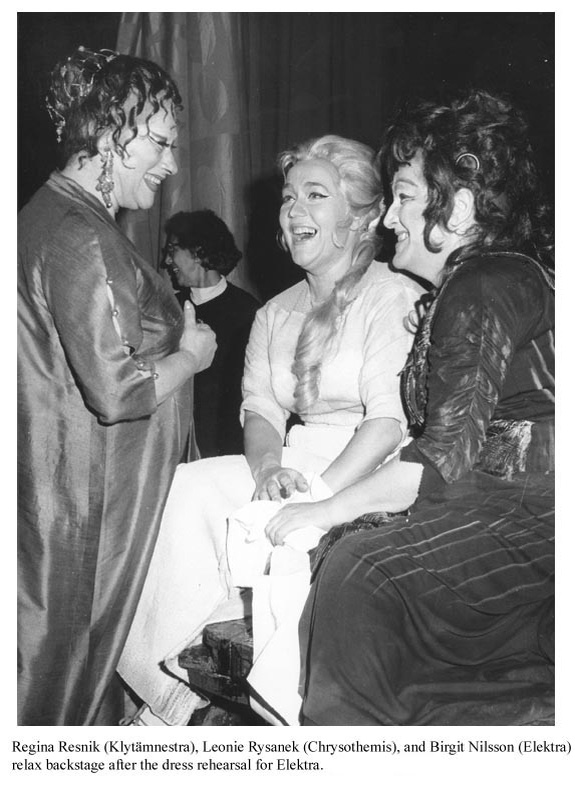
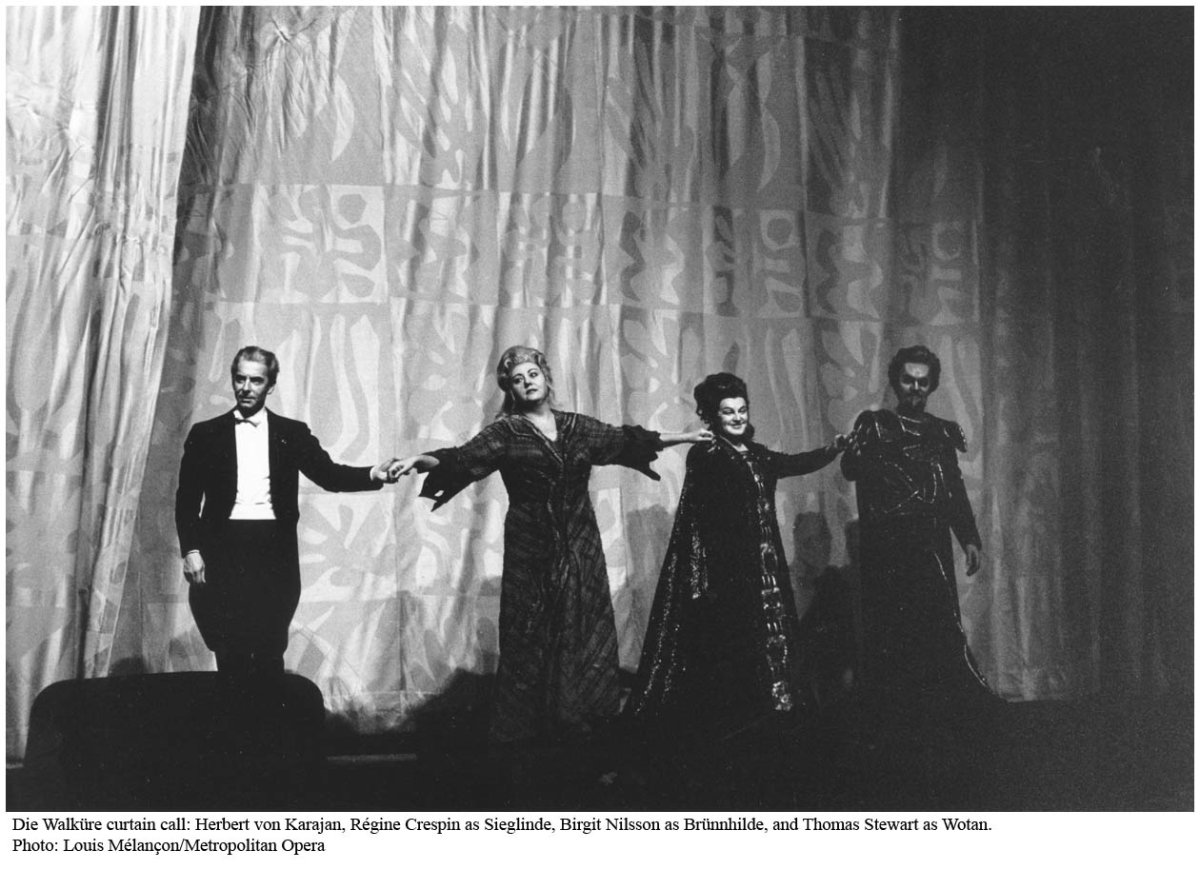
1960-1969
1967
Dimanche 1 janvier 1967 : Tristan und Isolde. Opéra royal de Stockholm. Varviso. Neate. Rundgren. Birgit Nilsson (Isolde). Saeden. Brilioth. Meyer.
Vendredi 6 janvier 1967 : Turandot. Londres, Royal Opera House Covent Garden. Mackerras. Pellegrini. McCracken. Rouleau. Bowman. Birgit Nilsson (Turandot).
Jeudi 26 janvier 1967 : Turandot. Staatsoper de Vienne. Klobucar. Birgit Nilsson (Turandot). Klein. Franc. King. Gueden.
Lundi 30 janvier 1967 : Elektra. Staatsoper de Vienne. Klobucar. Resnik. Birgit Nilsson (Elektra). Rysanek. Windgassen. Nienstedt.
Samedi 4 février 1967 : Turandot. Staatsoper de Vienne. Klobucar. Birgit Nilsson (Turandot). Klein. Franc. Zampieri. Lotte Rysanek..
Mardi 7 février 1967 : Elektra. Staatsoper de Vienne. Klobucar. Resnik. Birgit Nilsson (Elektra). Rysanek. Stolze. Nienstedt.
Samedi 11 février 1967 : Tristan und Isolde. Staatsoper de Vienne. Varviso. Windgassen. Kreppel. Birgit Nilsson (Isolde). Imdahl. Braun. Hoffman.
Jeudi 16 février 1967 : Tosca. Opéra royal de Stockholm. Westerberg. Birgit Nilsson (Floria Tosca). Ulfung. Bjorling.
Dimanche 19 février 1967 : Tristan und Isolde. Opéra royal de Stockholm. Varviso. Neate. Rundgren. Birgit Nilsson (Isolde). Saeden. Brilioth. Ericson.
Vendredi 10 mars 1967 : Salomé. Scala de Milan. Klobucar. Parly. Madeira. Birgit Nilsson (Salomé). Nocker. Peterson.
Lundi 13 mars 1967 : Salomé. Scala de Milan. Klobucar. Parly. Madeira. Birgit Nilsson (Salomé). Nocker. Peterson.
Vendredi 17 mars 1967 : Salomé. Scala de Milan. Klobucar. Parly. Madeira. Birgit Nilsson (Salomé). Nocker. Peterson.
Lundi 20 mars 1967 : Salomé. Scala de Milan. Klobucar. Parly. Madeira. Birgit Nilsson (Salomé). Nocker. Peterson.
Jeudi 23 mars 1967 : Salomé. Scala de Milan. Klobucar. Parly. Madeira. Birgit Nilsson (Salomé). Nocker. Peterson.
Vendredi 7 avril 1967 : Tristan und Isolde. Osaka. Boulez. Windgassen. Birgit Nilsson (Isolde). Andersson. Hotter. Nienstedt. Topper.
Lundi 10 avril 1967 : Tristan und Isolde. Osaka. Boulez. Windgassen. Birgit Nilsson (Isolde). Andersson. Hotter. Nienstedt. Topper.
Jeudi 13 avril 1967 : Tristan und Isolde. Osaka. Boulez. Windgassen. Birgit Nilsson (Isolde). Andersson. Hotter. Nienstedt. Topper.
Dimanche 16 avril 1967 : Tristan und Isolde. Osaka. Boulez. Windgassen. Birgit Nilsson (Isolde). Andersson. Hotter. Nienstedt. Topper.
Jeudi 20 avril 1967 : Récital de Lieder au Festival Hall d'Osaka (Alfred Walter au piano). Birgit Nilsson chante l'air d'Elisabeth de Tannhauser, ainsi que des oeuvres de Schubert, Richard Strauss et Sibelius.
Mercredi 3 mai 1967 : Turandot. Atlanta. Adler. Birgit Nilsson (Turandot). McCracken. Moffo. Giaiotti. Velis.
Mardi 9 mai 1967 : Turandot. Memphis. Adler. Birgit Nilsson (Turandot). McCracken. Tucci. Michalski. Velis.
Samedi 13 mai 1967 : Turandot. Dallas. Mehta. Birgit Nilsson (Turandot). McCracken. Tucci. Michalski. Velis.
Mardi 16 mai 1967 : Aida. Minneapolis. Schippers. Birgit Nilsson (Aida). McCracken. Rankin. Guarrera. Macurdy. Michalski.
Mardi 23 mai 1967 : Turandot. Détroit. Mehta. Birgit Nilsson (Turandot). Corelli. Moffo. Giaiotti. Velis.
Review of Collins George in the Detroit Free Press
PRINCIPALS ARE SUPERB: The Met Surpasses Itself with Brilliant 'Turandot'
"Turandot," which Metropolitan Opera played Tuesday at Masonic Auditorium, has always been one of the company's most brilliant productions. It was so when the company opened its season here with it six years ago. It was more so Tuesday. The same principals were there - Birgit Nilsson as the Princess Turandot and Franco Corelli as the Prince Calaf, who successfully guesses the princess' three riddles and eventually gains her love. To that extent - the principals, the superb settings and costumes - the production was like the first one.
The added brilliance came from three things.
First, Corelli used to be content to adopt an open-legged stance and bellow. His voice is the finest and fullest tenor on the stage today. He has learned to discipline that voice and to act, both with his vocal chords and his body.
The second point was the choice this year of Liu the slave girl who dies for love of the prince. This time it was Anna Moffo, who is a beautiful woman despite the fright wig she wore and has one of the loveliest lyric sopranos in the world.
To add to the excellence, conducting was Zubin Mehta, a great conductor both of opera and symphony. There were occasions when the orchestra sounded a bit loud, but "Turandot" is not an opera to be played softly.
As for Miss Nilsson, her voice - hard, true and brilliant - couldn't be bettered. As in
the first performance, she was perfection. One can hardly write about "Turandot" without mentioning the commissioners Ping, Pang and Pong, sung and acted delightfully, especially in their second act scene, by Frank Guarrera, Robert Nagy and Charles Anthony.
In short, the Metropolitan's performance of Puccini's last opera, continued to justify the troupe's reputation thoroughness and brilliance:
Lundi 29 mai 1967 : Turandot. Philadelphie. Mehta. Birgit Nilsson (Turandot). Corelli. Tucci. Giaiotti. Velis.
Review of Max de Schauensee in the Bulletin (Philadelphia)
The Met Returns With 'Turandot'
Sound Softened After First Act, Opera Passes Test in Big Hall
The Metropolitan Opera returned to Philadelphia last night after more than a six year silence. It was on March 21, 1961 that the Metropolitan last appeared here with oddly enough, the same opera that marks its return - Giacomo Puccini's "Turandot." Even some of the singers, notably Birgit Nilsson, Franco Corelli, and Philadelphian Frank Guarrera, were the same.
Here, however, the sameness ended. The present return of the Metropolitan to Philadelphia is a courageously challenged experiment. Instead of the Academy of Music, we have the far larger, reconditioned Civic Center.
Instead of the final weeks of October - when the 1961 season began - we are about to greet the month of June. The size and character of the audience also is different, and the size of the present auditorium must be taken into account in more ways than one.
Last night's [start] of the Met's one-week season was a confirmed and deserved success. A huge and responsive crown attended. Everything worked smoothly except the amplification during the first act. Here it sounded much too loud and resultingly metallic. But by Act Two, things were nicely adjusted. And during the final act, you were hardly conscious of the added volume - at least not from Row M downstairs where I was sitting.
Since the Civic Center is co-used for sporting events, contains vast spaces, an opera of a spectacular rather than intimate character is indicated as better suited to these distances.
"Turandot" is such opera and Puccini's scoring is good and loud with its strong demand for stentorian voices. It is difficult to image more suitable voices than those of Mme. Nilsson and Mr. Corelli for the roles of Turandot and Calaf. The soprano has a trumpet in her throat and a dead-center attack on the uppermost note which are sensational. She has softened and improved her characterization of the icy Chinese princess and remains undoubtedly the Turandot of our day.
Mr. Corelli sang splendidly and looked handsome. He stopped the show with his melodious "Nessun dorma" and its climatic high B. This good-looking fellow had himself a time all evening; so did the enthusiastic fans.
Dimanche 4 juin 1967 : Tristan und Isolde. Opéra royal de Stockholm. Varviso. Neate. Rundgren. Birgit Nilsson (Isolde). Saeden. Brilioth. Meyer.
Samedi 17 juin 1967 : Tristan und Isolde. Staatsoper de Vienne. Varviso. Martell. Kreppel. Birgit Nilsson (Isolde). Metternich. Braun. Hoffman.
Jeudi 22 juin 1967 : Turandot. Staatsoper de Vienne. Klobucar. Birgit Nilsson (Turandot). Equiluz. Arie. McCracken. Gueden.
Dimanche 23 juillet 1967 : Die Walkure. Festival de Bayreuth. Bohm. King. Nienstedt. Adam. Birgit Nilsson (Brunnhilde). Rysanek. Burmeister.
Mardi 25 juillet 1967 : Siegfried. Festival de Bayreuth. Bohm. Windgassen. Wohlfahrt. Adam. Neidlinger. Bohme. Hoffgen. Birgit Nilsson (Brunnhilde).
Jeudi 27 juillet 1967 : Gotterdammerung. Festival de Bayreuth. Bohm. Windgassen. Birgit Nilsson (Brunnhilde). Stewart. Dvorakova. Greindl. Neidlinger. Modl.
Jeudi 10 août 1967 : Die Walkure. Festival de Bayreuth. Bohm. King. Nienstedt. Adam. Birgit Nilsson (Brunnhilde). Rysanek. Burmeister.
Samedi 12 août 1967 : Siegfried. Festival de Bayreuth. Bohm. Windgassen. Wohlfahrt. Adam. Neidlinger. Bohme. Hoffgen. Birgit Nilsson (Brunnhilde).
Lundi 14 août 1967 : Gotterdammerung. Festival de Bayreuth. Bohm. Windgassen. Birgit Nilsson (Brunnhilde). Stewart. Dvorakova. Greindl. Neidlinger. Modl.
Mardi 5 septembre 1967 : Tosca. Opéra royal de Stockholm. Gregor. Birgit Nilsson (Floria Tosca). Ulfung. Jupither.
Jeudi 14 septembre 1967 : Elektra. Staatsoper de Vienne en tournée à Montreal. Bohm. Resnik. Birgit Nilsson (Elektra). Rysanek. Uhl. Nienstedt.
Lundi 18 septembre 1967 : Elektra. Staatsoper de Vienne en tournée à Montreal. Bohm. Resnik. Birgit Nilsson (Elektra). Rysanek. Uhl. Nienstedt.
Dimanche 24 septembre 1967 : Concert. Teatro Colon Buenos Aires. Birgit Nilsson avec accompagnement orchestral. Direction musicale de Roberto Kinsky : Ah Perfido (Beethoven), Tristan und Isolde - Prélude acte 1 et mort d'Isolde (Wagner), La luce langue - Macbeth (Verdi), Pace, pace, mio Dio - La forza del destino (Verdi), Antiche danze ed arie (Respighi), In questa reggia - Turandot (Puccini).
Vendredi 29 septembre 1967 : Die Walkure. Teatro Colon Buenos Aires. Leitner. Martell. Hagenau. Ward. Jones. Birgit Nilsson (Brunnhilde). Hoffman.
Dimanche 1 octobre 1967 : Die Walkure. Teatro Colon Buenos Aires. Leitner. Martell. Hagenau / Langdon. Ward / Giongo. Jones. Birgit Nilsson / Amy Shuard (Brunnhilde). Hoffman.
Mardi 3 octobre 1967 : Die Walkure. Teatro Colon Buenos Aires. Leitner. Martell. Hagenau / Langdon. Ward / Giongo. Jones. Birgit Nilsson / Amy Shuard (Brunnhilde). Hoffman.
Jeudi 5 octobre 1967 : Die Walkure. Teatro Colon Buenos Aires. Leitner. Martell. Hagenau / Langdon. Ward / Giongo. Jones. Birgit Nilsson / Amy Shuard (Brunnhilde). Hoffman.
Samedi 7 octobre 1967 : Die Walkure. Teatro Colon Buenos Aires. Leitner. Martell. Hagenau / Langdon. Ward / Giongo. Jones. Birgit Nilsson / Amy Shuard (Brunnhilde). Hoffman.
Jeudi 12 octobre 1967 : Die Walkure. Teatro Colon Buenos Aires. Leitner. Martell. Hagenau / Langdon. Ward / Giongo. Jones. Birgit Nilsson / Amy Shuard (Brunnhilde). Hoffman.
Vendredi 13 octobre 1967 : Siegfried. Teatro Colon Buenos Aires. Leitner. Windgassen. Wohlfahrt. Ward. Kelemen. Langdon. Wien. Birgit Nilsson (Brunnhilde).
Dimanche 15 octobre 1967 : Siegfried. Teatro Colon Buenos Aires. Leitner. Windgassen. Wohlfahrt. Ward / Giongo. Kelemen. Langdon. Hoffgen / Wien. Birgit Nilsson / Amy Shuard (Brunnhilde).
Mardi 17 octobre 1967 : Siegfried. Teatro Colon Buenos Aires. Leitner. Windgassen. Wohlfahrt. Ward / Giongo. Kelemen. Langdon. Hoffgen / Wien. Birgit Nilsson / Amy Shuard (Brunnhilde).
Jeudi 19 octobre 1967 : Siegfried. Teatro Colon Buenos Aires. Leitner. Windgassen. Wohlfahrt. Ward / Giongo. Kelemen. Langdon. Hoffgen / Wien. Birgit Nilsson / Amy Shuard (Brunnhilde).
Mardi 24 octobre 1967 : Siegfried. Teatro Colon Buenos Aires. Leitner. Windgassen. Wohlfahrt. Ward / Giongo. Kelemen. Langdon. Hoffgen / Wien. Birgit Nilsson / Amy Shuard (Brunnhilde).
Vendredi 27 octobre 1967 : Gotterdammerung. Teatro Colon Buenos Aires. Leitner. Birgit Nilsson / Amy Shuard (Brunnhilde). Windgassen. Giongo. Hagenau. Jones. Hoffman. Kelemen / Mattielo.
Dimanche 29 octobre 1967 : Gotterdammerung. Teatro Colon Buenos Aires. Leitner. Birgit Nilsson / Amy Shuard (Brunnhilde). Windgassen. Giongo. Hagenau. Jones. Hoffman. Kelemen / Mattielo.
Mardi 31 octobre 1967 : Gotterdammerung. Teatro Colon Buenos Aires. Leitner. Windgassen. Birgit Nilsson (Brunnhilde). Giongo. Jones. Hagenau.
Vendredi 3 novembre 1967 : Gotterdammerung. Teatro Colon Buenos Aires. Leitner. Birgit Nilsson / Amy Shuard (Brunnhilde). Windgassen. Giongo. Hagenau. Jones. Hoffman. Kelemen / Mattielo.
Dimanche 5 novembre 1967 : Gotterdammerung. Teatro Colon Buenos Aires. Leitner. Birgit Nilsson / Amy Shuard (Brunnhilde). Windgassen. Giongo. Hagenau. Jones. Hoffman. Kelemen / Mattielo.
Dimanche 12 novembre 1967 : New York Philharmonic Hall. Lincoln center. Concert Birgit Nilsson / John Wustman (piano).
Mardi 21 novembre 1967 : Die Walkure. Metropolitan opéra de New York (400eme représentation de cette œuvre au Met). Karajan. Birgit Nilsson (Brunnhilde). Vickers. Janowitz. Stewart. Ludwig. Ridderbusch.
Vendredi 24 novembre 1967 : Die Walkure. Metropolitan opéra de New York. Karajan. Birgit Nilsson (Brunnhilde). Vickers. Janowitz. Stewart. Ludwig. Ridderbusch.
Lundi 27 novembre 1967 : Die Walkure. Metropolitan opéra de New York. Karajan. Birgit Nilsson (Brunnhilde). Vickers. Janowitz. Berry. Ludwig. Ridderbusch. 100ème BRUNNHILDE.
Samedi 2 décembre 1967 : Die Walkure. Metropolitan opéra de New York. Karajan. Birgit Nilsson (Brunnhilde). Vickers. Crespin. Stewart. Ludwig. Ridderbusch.
Review of Conrad L. Osborne in the London Times dated December 14, 1967
I wonder if there has been in our time a lesson in cultural politicking like that taught by the von Karajan Ring Cycle. Here is a production created in two major centers, one an important spring festival, the other an international opera house, the joint nature of the enterprise being used as amortization against what would otherwise be prohibitive costs in time and money. And here is direct and indirect financial support being drawn from the contemporary equivalence of the bygone patrons of art: the other, wealthier entertainment media (television, films and a record company, on the German side) and a huge corporation of expansive outlook (Eastern Airlines, underwriter on the American side to the tune of $500,000). Pre-requisite: a man who combines artistic stature with a feel for power.
The first section of the cycle to be placed on view at the Met is "Die Walküre." There has been a fair amount of grousing about it, and I have my reservations, too. But it is incomparably the best Wagner to have been seen and heard at the Met in many years.
To begin (and end, too. I suppose), this is Wagner in the hands of a brilliant, imaginative conductor. It is true, that this conductor's concept is a subject of legitimate controversy, but it is still the thought-out product of a superior musical mind. As it happens, I sympathize with Karajan's approach; I found this the most cohesive and beautiful reading of "Die Walküre" in my experience. Most of the complaints center around the first act, but Acts 2 and 3 are proportioned logically in relation to it; it is simply that the scoring of the first act is far lighter and more lyrical than that of the succeeding acts, due to the obvious differences in the nature of the dramatic materials.
After looking through and listening to the comments that followed the first night, I was prepared for an understated reading but found simply a scaled reading, one that kept magnificent balance between pit and stage; that maintained sensible proportion so that climaxes were climaxes, and not just the louder following the loud, and that exuded a subtle but unmistakable tension that drew one into the drama and "forced" one to listen. And that is what happened; for once, a Met audience shut up and paid attention, intent on the progress of the narrative and on the lovely things that were happening in the pit.
Karajan has the wonderful gift of projecting this music in such a way that it seems to happening for the first time (the very rare and precious quality striven for by serious actors and singers), so that though one knows perfectly well what is coming next, one nevertheless leans forward in anticipation to hear it unfold. My own few moments of impatience had nothing to do with the level of volume, which I found entirely satisfying, but with the impulse of the tempo at two or three climatic moments, where both I and the singers longed for a slight quickening which Karajan was not about to grant us.
Acts 2 and 3 were simply stupendous - extraordinary colour and balance and rhythmic rightness, and a delicious quality that I can only call "wholeness" in the sound, so that the clarity was achieved without vivisection of the score. It remains to be said that the difference between the playing secured from the orchestra under Karajan and that secured on an average good Metropolitan evening is downright embarrassing; on the occasion I heard "Die Walküre" the brass tired in the third act but even the occasional resulting burbles would hardly detract from the gorgeous overall impression. I guess that some hearers are bothered by the fact that the singers are so consistently audible. We heard every word, every note, we followed the singers and went with them. In other words, Karajan is doing what used to be considered the essential task of any competent operatic conductor: accompanying.
As a director, Karajan is on shakier ground. But again, I'm afraid I feel that the thing everyone is complaining about is being done rather well, while the things that are really being fluffed have stirred no notice. For some reason, everyone is suddenly concerned about lighting. Folk who make no murmur season in, season out at light plots which apparently consist of throwing a master switch profess acute discomfort over the dimness of the stage picture. Nonsense. This "Walküre" is intelligently and poetically lit. It is prevailing dark because it is supposed to be prevailingly dark. The essential mood of each scene is sensitively set, the transitions are steady and well matched to the score, and the principals are lit in a manner that is understated and subtle, but entirely clear and distinct. The lighting scheme allows for the necessary forming and reforming of Günther Schneider-Siemensen's set, and lets it happen in a natural, albeit eminently theatrical way.
The real problems relate to the behavior of the principals. There is almost never anything specific enough to illuminate the relationships of the characters or to humanize their motives; nearly all the blocking is unimaginative, and some of it (in Act 1 particularly) is almost amateurish. When a character stands or sits or makes a cross, there must be a reason, and the reason most be organic not only to the Meaning of the Drama (?), but to the character himself. It's not happening.
Schneider-Siemssen's sets are built around a ring unit. It has some obvious advantages and is being used here in a flexible and logical way. I do not see how a sensible judgment can be made until we have it in the context of the whole cycle. The projections include some striking effects, and the fire business is tolerably well done - gone forever, I assume, is the backroom-of-the-laundry effect we used to get with all that hissing steam.
Despite some new characterizations, comment on the individual singers must start with Nilsson. She was in finest voice, and has improved her Brünnhilde in every respect over the past few season. There is now no qualification one can make to keep it from the ranks of the greatest; she is thrilling and moving. She has even incorporated the swoops in the Battle Cry, where she always used to break off for a fresh attack on the top B's and C's. Since she is one of the few dramatic sopranos with absolute security in that territory, and one of the few who can carry up the full volume of her voice without weighting it down, the effect is hair-raising. The usual Sieglinde to date has been Gundula Janowitz, well received in her first appearance here. For the performance I attended, she fell ill and was replaced by Regine Crespin, laterally (and again presently) a Brünnhilde, I was sorry not to hear Miss Janowitz, but not a bit sorry to hear Crespin, who was in her very top form and did some great singing of her own. A rare pleasure, the remarkable adequacy of her lovely voice in "Der Männer sippe," the fullness of her first act climaxes, the despairing passion of her second act, and most of all the roof-raising outpouring of warm, round sound at Sieglinde's last and greatest moment, "O hehrestes Wunder!" Nilsson and Crespin spurring each other on make for the sort of thing one remembers with a chill for years.
Christa Ludwig, the Fricka, started rather bumpily, but warmed to a good second half of her scene. Jon Vickers was unfortunately bothered by some sort of indisposition (a call for Ticho Parly was circulating before the performance), which seemed to hamper him most in the lower octave of his voice, so that much of his Siegmund made less than its normal effect. He seemed to have sung through the difficulty by Act 2, which was close to his normal impressive level.
The Wotan, Thomas Stewart, has in my opinion been accorded less than his due. It is perfectly true that his voice is not of an ideal weight and size for this role, and further that there were enough moments of insecurity to make one wonder whether or not he can adjust to it healthily. But in a field which has included, of late at the Met, Otto Edelmann, Hermann Uhde, Randolph Symonette, and a past-his-best George London, Mr. Stewart is far from the bottom of the class; it is a highly intelligent, sensitive portrayal, distinguished by splendid projection of the text, but utter honesty and seriousness from beginning to end, by a number of thoughtful and original concepts, and by a vocal approach which is much closer to real singing than is the present-day norm. The sound is basically full, warm, and attractive, the range sufficient, the phrasing musical. One hopes that he finds the technical resource to sing the part safely without stinting on the essentials, for he is a satisfying artist.
As Hunding we had Karl Ridderbusch, a new German bass who came in place of the originally-announced Martti Talvela. He has a large, appealing bass voice which seems not entirely settled in, very imposing moments are followed by rather tentative ones. The Walküres were sanely cast, and produced good ensemble. The ticket lines have been long, and they can't all be Eastern Airlines employees.
Mardi 5 décembre 1967 : Die Walkure. Metropolitan opéra de New York. Karajan. Birgit Nilsson (Brunnhilde). Vickers. Crespin. Berry (acte 2) / Stewart (acte 3). Ludwig. Ridderbusch.
Dimanche 17 décembre 1967 : Tristan und Isolde. Staatsoper de Vienne. Bohm. Thomas. Talvela. Birgit Nilsson (Isolde). Wiener. Bunger. Hesse.
Vendredi 22 décembre 1967 : Tristan und Isolde. Staatsoper de Vienne. Bohm. Thomas. Kreppel. Birgit Nilsson (Isolde). Wiener. Bunger. Hesse.
1960-1969
1968
Mardi 2 janvier 1968 : Tristan und Isolde. Opéra royal de Stockholm. Bendix. Hoiseth. Rundgren. Birgit Nilsson (Isolde). Bjorling. Brilioth. Ericson.
Vendredi 5 janvier 1968 : Tosca. Opéra royal de Stockholm. Bendix. Birgit Nilsson (Floria Tosca). Ulfung. Saeden.
Lundi 8 janvier 1968 : Tristan und Isolde. Staatsoper Vienne. Hollreiser. Thomas. Kreppel. Birgit Nilsson (Isolde). Wiener. Bunger. Hesse.
Jeudi 11 janvier 1968 : Elektra. Staatsoper Vienne. Hollreiser. Mödl. Birgit Nilsson (Elektra). Lindholm. Beirer. Nienstedt.
Lundi 12 février 1968 : Elektra. Metropolitan opéra de New York. Schippers. Birgit Nilsson (Elektra). Rysanek. Resnik. Dooley. Nagy.
Vendredi 16 février 1968 : Elektra. Metropolitan opéra de New York. Schippers. Birgit Nilsson (Elektra). Rysanek. Resnik. Dooley. Nagy.
Mardi 20 février 1968 : Elektra. Metropolitan opéra de New York. Schippers. Birgit Nilsson (Elektra). Delcampo. Madeira. Dooley. Parly.
Review of Irving Kolodin in the Saturday Review
In conjunction with Birgit Nilsson's last Elektra of the season - which was, perhaps, the best sung of any she has ever offered here - there was occasion for re-acquaintance with the Klytämnestra of Jean Madeira. She has, in the lapse of seven years since last performing the part here, intensified its horror content by an infusion of psychopathic degeneracy almost endearing in its loathsomeness. As for vocal production, when she enunciated her first words - "Was willst Du? Seht doch, dort!" - one had the impression that, maybe, after all, the new Met did incorporate an amplifying system. Such a fantasy was of no service to Ina Delcampo, a soprano associated with a background in Vienna, who made her debut as Chrysothemis. Her action suggested a long, hard look at the characterization of Leonie Rysanek, but it was blurred, foggy, and unfocused in vocal production - a set of strong disabilities vis-a-vis Strauss's scoring.
Samedi 24 février 1968 : Die Walkure. Metropolitan Opera de New York. Klobucar. Birgit Nilsson (Brunnhilde). Vickers. Rysanek. Stewart. Ludwig. Ridderbusch.
Lundi 4 mars 1968 : Die Walkure. Metropolitan Opera de New York. Klobucar. Birgit Nilsson (Brunnhilde). Vickers. Janowitz. Stewart. Ludwig. Ridderbusch.
Samedi 23 mars 1968 : Turandot. Opéra de Paris, Palais Garnier. Prêtre. Birgit Nilsson (Turandot). Guiot. King. Mars. Benoît. Corazza. Mallabrera. Loreau. Soyer.
Mercredi 27 mars 1968 : Turandot. Opéra de Paris, Palais Garnier. Prêtre. Birgit Nilsson (Turandot). Guiot. King. Mars. Benoît. Corazza. Mallabrera. Loreau. Soyer.
Vendredi 29 mars 1968 : Turandot. Opéra de Paris, Palais Garnier. Prêtre. Birgit Nilsson (Turandot). Guiot. King. Mars. Benoît. Corazza. Mallabrera. Loreau. Soyer.
Samedi 8 juin 1968 : Gotterdammerung. Staatsoper Vienne. Stein. Beirer. Birgit Nilsson (Brunnhilde). Janowitz. Kreppel. Hotter. Neidlinger. Hesse.
Dimanche 28 juillet 1968 : Tristan und Isolde. Festival de Bayreuth. Bohm. Windgassen. Birgit Nilsson (Isolde). Hoffman. Feldhoff. Talvela. Bunger.
Vendredi 23 août 1968 : Tristan und Isolde. Festival de Bayreuth. Klobucar. Windgassen. Birgit Nilsson (Isolde). Hoffman. Feldhoff. Talvela. Bunger.
Mardi 17 septembre 1968 : Turandot. Metropolitan opéra de New York. Mehta. Birgit Nilsson (Turandot). Konya. Tucci. Michalski. Caruso.
Vendredi 20 septembre 1968 : Turandot. Metropolitan opéra de New York. Mehta. Birgit Nilsson (Turandot). Konya. Tucci. Michalski. Caruso.
Samedi 28 septembre 1968 : Turandot. Metropolitan opéra de New York. Mehta. Birgit Nilsson (Turandot). Konya. Tucci. Michalski. Caruso.
Vendredi 4 octobre 1968 : Tosca. Metropolitan Opera de New York. Molinari-Pradelli. Birgit Nilsson (Floria Tosca). Corelli. Bacquier.
Review of Winthrop Sargeant in The New Yorker
The Metropolitan Opera's new production of "Tosca," which was unveiled last Friday night, has its good and its bad points. The presence in the cast of Birgit Nilsson and Franco Corelli will unquestionably make it a best-seller - partly, I think because these are the two loudest singers to be heard today.
The new sets and costumes, by Rudolf Heinrich, unlike his sets for "Salome" and "Elektra," are agreeably realistic. Aside from a Mary Magdalene in a hoop skirt who appears in the painting Cavaradossi is creating in the first act (and don't argue with me that Cavaradossi is a nineteenth-century figure; nobody else in the fresco he was painting wore anything but Biblical clothing), I found the scenery entirely effective, if a little heavy.
As for the new Viennese director, Otto Schenk, who had devised the action, I was considerably disappointed in him. "Tosca" is a terrifying enough opera without having every point of terror exaggerated to an extent that would make it clear to a six-year old. I have never seen a production in which so much rolling on the floor and free-style wrestling occurred. The visual pun of making Scarpia look like Napoleon is not really very clever or elucidating. And it is, I think, a great mistake to spoil the end of the second act by making Tosca light the candles she places beside Scarpia's body. It introduces an air of deliberation in Tosca's part that is not consistent with her character. The candles should be an afterthought, stimulated by the sight of candles already lit.
There were also a good many episodes that I am sure Mr. Schenk was not responsible for. The corpse of Cavaradossi wagged its head and lifted an arm in the last act, and in the middle of the second act Gabriel Bacquier - good actor that he is - became so immersed in his role as Scarpia that he clearly enunciated the words, "Get up!" in English to Miss Nilsson when Spoletta knocked at the door, just as if he were caught in an embarrassing clinch in real life.
Miss Nilsson was costumed in a very feminine way and made a handsome heroine. She also sang superbly and, within the framework of Mr. Schenk's staging, acted with a great deal of conviction. Her "Vissi d'arte" was sung, as has been fashionable now and then since the time of Jeritza, as she lay on her stomach. Mr. Corelli acted when it did not interfere with the display of his voice. His "Vittoria, vittoria!" was delivered with the power appropriate to a wounded bull and was protracted beyond all rules of good taste, just to show how long his lung power could hold out. He also took all the meditative atmosphere out of "E lucevan le stelle," tearing it to shreds and bellowing a good part of it. However, it is only fair to note that his audience shouted and pounded its approval of this vocal weight-lifting.
Mr. Bacquier is an intelligent Scarpia if not the loudest one in the world, and he did what he could with what Mr. Schenk gave him. Fernando Corena was, as always, an outstanding Sacristan. The lesser roles were well done, and Francesco Molinari-Pradelli conducted a knowing performance.Mercredi 9 octobre 1968 : Turandot. Metropolitan opéra de New York. Mehta. Birgit Nilsson (Turandot). McCracken. Stojanovic. Giaiotti. Caruso.
Samedi 12 octobre 1968 : Tosca. Metropolitan Opera de New York. Molinari-Pradelli. Birgit Nilsson (Floria Tosca). Corelli. Bacquier.
Mardi 15 octobre 1968 : Tosca. Metropolitan Opera de New York. Molinari-Pradelli. Birgit Nilsson (Floria Tosca). Corelli. Bacquier.
Vendredi 18 octobre 1968 : Tosca. Metropolitan Opera de New York. Molinari-Pradelli. Birgit Nilsson (Floria Tosca). Corelli. Bacquier.
Lundi 21 octobre 1968 : Tosca. Metropolitan Opera de New York. Molinari-Pradelli. Birgit Nilsson (Floria Tosca). Corelli. Bacquier.
Jeudi 24 octobre 1968 : Tosca. Metropolitan Opera de New York. Molinari-Pradelli. Birgit Nilsson (Floria Tosca). Corelli. Bacquier.
Jeudi 31 octobre 1968 : Die Walkure. Metropolitan Opera de New York. Karajan. Birgit Nilsson (Brunnhilde). Vickers. Crespin. Stewart. Ludwig. Talvela.
Mardi 5 novembre 1968 : Die Walkure. Metropolitan Opera de New York. Karajan. Birgit Nilsson (Brunnhilde). King. Crespin. Stewart. Ludwig. Talvela.
Samedi 9 novembre 1968 : Tosca. Metropolitan Opera de New York. Molinari-Pradelli. Birgit Nilsson (Floria Tosca). Corelli. Raimondi.
Jeudi 14 novembre 1968 : The University musical society of the university of Michigan presents Birgit Nilsson, soprano, John Wustman at the piano. Hill auditorium, Ann Arbor, Michigan. Programme : Dich teure Halle, Träume, Schmerzen (Wagner), Gretchen am Spinnrade, Auflösung, Die junge Nonne (Schubert), Befreit, Wiegenlied, Zueignung (Richard Strauss), Höstkväll, ver det en dröm (Sibelius), Morgonsang, gieb mir dein Herze (Melartin), det förste Möde, en svane, en dröm Grieg), ebben, ne andro lontana (Catalani - La Wally)
Dimanche 24 novembre 1968 : Tristan und Isolde. Staatsoper Vienne. Bohm. Thomas. Frick. Birgit Nilsson (Isolde). Wiener. Bunger. Hesse.
Jeudi 28 novembre 1968 : Elektra. Staatsoper Vienne. Bohm. Mödl. Birgit Nilsson (Elektra). Rysanek. Beirer. Nienstedt.
Dimanche 1 décembre 1968 : Turandot. Staatsoper Vienne. Klobucar. Birgit Nilsson (Turandot). Equiluz. Guthrie. McCracken. Lotte Rysanek.
Mercredi 4 décembre 1968 : Tosca. Staatsoper Vienne. Klobucar. Birgit Nilsson (Floria Tosca). Spiess. Hotter.
Samedi 7 décembre 1968 : Tosca. Opéra royal de Stockholm. Bendix. Birgit Nilsson (Floria Tosca). Ulfung. Saeden.
Dimanche 29 décembre 1968 : Die Walkure. Opéra royal de Stockholm. Bendix. Brilioth. Rundgren. Bjorling. Af Malmborg. Birgit Nilsson (Brunnhilde). Ericson.
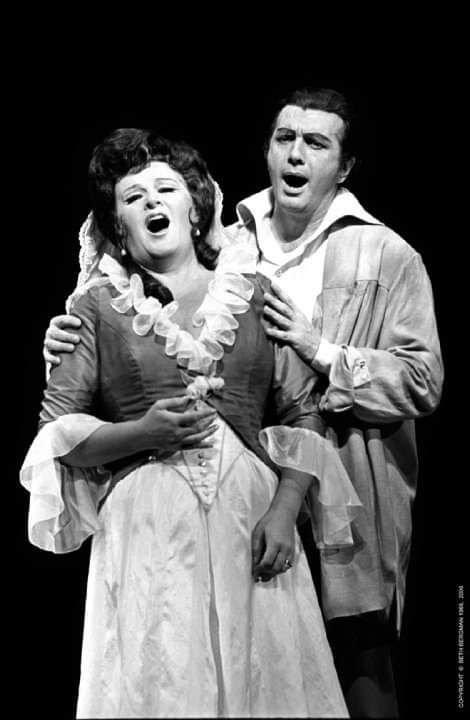
1960-1969
1969
Samedi 4 janvier 1969 : Turandot. Birgit Nilsson (Turandot). Munich Nationaltheater.
Mardi 14 janvier 1969 : Fidelio. Birgit Nilsson (Leonore) Munich Nationaltheater.
Lundi 27 janvier 1969 : Elektra. Birgit Nilsson (Elektra) Munich Nationaltheater.
Mardi 28 janvier 1969 : Die Walkure. Birgit Nilsson (Brunnhilde) Munich, Nationaltheater.
Jeudi 30 janvier 1969 : Siegfried. Birgit Nilsson (Brunnhilde) Munich Nationaltheater.
Dimanche 2 février 1969 : Gotterdammerung. Birgit Nilsson (Brunnhilde) Munich Nationaltheater.
Samedi 15 février 1969 : Tosca. Metropolitan opéra de New York. Schick. Birgit Nilsson (Floria Tosca). Domingo. Dooley.
Samedi 15 février 1969 : Metropolitan Opera de New York. GALA PERFORMANCE. Schick. Bohm. Cleva. Adler. Mehta / Lorengar. Domingo. Cassi. Uppman. Franke. Alvary. Boucher. Koestner. Grist. Milnes. Arroyo. Tucci. Gedda. Price. Caballe. King. Lear. Krause. Moffo. Birgit Nilsson (Tristan und Isolde - Liebestod). Kabaivanska. Bumbry. Siepi. Macurdy. Carelli.
Mercredi 19 février 1969 : Die Walkure. Metropolitan opéra de New York. Karajan. Birgit Nilsson (Brunnhilde). Vickers. Crespin. Adam. Veasey. Ridderbusch.
Samedi 22 février 1969 : Turandot. Metropolitan Opera de New York. Mehta. Birgit Nilsson (Turandot). King. Caballe. Giaiotti. Caruso. 100e REPRESENTATION DE TURANDOT AU METROPOLITAN OPERA.
Mercredi 26 février 1969 : Turandot. Metropolitan Opera de New York. Mehta. Birgit Nilsson (Turandot). King. Arroyo. Giaiotti. Caruso.
Samedi 1 mars 1969 : Die Walkure. Metropolitan opéra de New York. Karajan. Birgit Nilsson (Brunnhilde). Vickers. Crespin. Adam. Veasey. Ridderbusch.
Samedi 22 mars 1969 : Turandot. Opéra royal de Stockholm. Varviso. Birgit Nilsson (Turandot). Sivall. Rundgren. Lazaro. Kleimert.
Mardi 25 mars 1969 : Die Walkure. Birgit Nilsson (Brunnhilde) Munich, Nationaltheater.
Jeudi 27 mars 1969 : Siegfried. Birgit Nilsson (Brunnhilde) Munich Nationaltheater.
Dimanche 30 mars 1969 : Gotterdammerung. Birgit Nilsson (Brunnhilde) Munich Nationaltheater.
Vendredi 9 mai 1969 : Elektra. Londres Royal Opera House Covent Garden. Solti. Birgit Nilsson (Elektra). Collier. Resnik. McIntyre. Craig.
Mardi 13 mai 1969 : Elektra. Londres Royal Opera House Covent Garden. Solti. Birgit Nilsson (Elektra). Collier. Resnik. McIntyre. Craig.
Vendredi 16 mai 1969 : Elektra. Londres Royal Opera House Covent Garden. Solti. Birgit Nilsson (Elektra). Collier. Resnik. McIntyre. Craig.
Lundi 19 mai 1969 : Elektra. Londres Royal Opera House Covent Garden. Solti. Birgit Nilsson (Elektra). Collier. Resnik. McIntyre. Craig.
Mercredi 4 juin 1969 : Tristan und Isolde. Staatsoper Vienne. Bohm. Thomas. Kreppel. Birgit Nilsson (isolde). Wiener. Bunger. Hesse.
Dimanche 8 juin 1969 : Elektra. Staatsoper Vienne. Bohm. Resnik. Birgit Nilsson (Elektra). Rysanek. Windgassen. Adam.
Jeudi 12 juin 1969 : Die Walkure. Staatsoper Vienne. Stein. Thomas. Frick. Adam. Rysanek. Birgit Nilsson (Brunnhilde). Hoffman.
Dimanche 15 juin 1969 : Siegfried. Staatsoper Vienne. Stein. Thomas. Birgit Nilsson (Brunnhilde). Adam. Kelemen. Stolze. Frick. Rossel-Majdan.
Mercredi 18 juin 1969 : Gotterdammerung. Staatsoper Vienne. Stein. Beirer. Birgit Nilsson (Brunnhilde). Janowitz. Frick. Wiener. Kelemen. Ludwig.
Mercredi 16 Juillet 1969 : Turandot. Arènes de Vérone. Molinari-Pradelli. Birgit Nilsson (Turandot). Domingo. Tucci. Vinco. Selon la légende locale, le contre-ut de Birgit Nilsson s'entendait par-delà les murs de l'amphithéâtre.
Samedi 19 juillet 1969 : Turandot. Arènes de Vérone. Molinari-Pradelli. Birgit Nilsson (Turandot). Domingo. Tucci. Vinco.
Lundi 28 juillet 1969 : Tristan und Isolde. Festival de Bayreuth. Bohm. Windgassen. Talvela. Birgit Nilsson (Isolde). Feldhoff. Bunger. Hoffman.
Lundi 11 août 1969 : Tristan und Isolde. Festival de Bayreuth. Bohm. Windgassen. Talvela. Birgit Nilsson (Isolde). Feldhoff. Bunger. Hoffman.
Lundi 25 août 1969 : Tristan und Isolde. Festival de Bayreuth. Bohm. Windgassen. Talvela. Birgit Nilsson (Isolde). Feldhoff. Bunger. Hoffman.
Jeudi 4 septembre 1969 : Die Walkure. Opéra royal de Stockholm. Bendix. Brilioth. Cederlof. Tyren. Nordmo-Lovberg. Birgit Nilsson (Brunnhilde). Ericson.
Lundi 8 septembre 1969 : Die Walkure. Staatsoper Vienne. Stein. Beirer. Ridderbusch. Wiener. Rysanek. Birgit Nilsson (Brunnhilde). Hesse.
Jeudi 11 septembre 1969 : Siegfried. Staatsoper Vienne. Stein. Beirer. Birgit Nilsson (Brunnhilde). Wiener. Pernerstorfer. Klein. Ridderbusch. Rossel-Majdan.
Dimanche 14 septembre 1969 : Gotterdammerung. Staatsoper Vienne. Stein. Beirer. Birgit Nilsson (Brunnhilde). Schwarzenberg. Kreppel. Wiener. Pernerstorfer. Hesse.
Jeudi 30 octobre 1969 : Turandot. Opéra de Seattle. Henry Holt. Birgit Nilsson (Turandot). Archie Drake / William Rhodes. Evelyn Manjac / Anna Levitski. Ernesto Veronelli/ / Erik Townsend. Nicola Moscona / Archie Drake.
Samedi 1 novembre 1969 : Turandot. Opéra de Seattle. Henry Holt. Birgit Nilsson (Turandot). Archie Drake / William Rhodes. Evelyn Manjac / Anna Levitski. Ernesto Veronelli/ / Erik Townsend. Nicola Moscona / Archie Drake.
Mercredi 5 novembre 1969 : Turandot. Opéra de Seattle. Henry Holt. Birgit Nilsson (Turandot). Archie Drake / William Rhodes. Evelyn Manjac / Anna Levitski. Ernesto Veronelli/ / Erik Townsend. Nicola Moscona / Archie Drake.
Vendredi 7 novembre 1969 : Turandot. Opéra de Seattle. Henry Holt. Birgit Nilsson (Turandot). Archie Drake / William Rhodes. Evelyn Manjac / Anna Levitski. Ernesto Veronelli/ / Erik Townsend. Nicola Moscona / Archie Drake.
Samedi 8 novembre 1969 : Turandot. Opéra de Seattle. Henry Holt. Birgit Nilsson (Turandot). Archie Drake / William Rhodes. Evelyn Manjac / Anna Levitski. Ernesto Veronelli/ / Erik Townsend. Nicola Moscona / Archie Drake.
Lundi 17 novembre 1969 :Concert Eastman Theater, Rochester, New York.
Lundi 8 décembre 1969 : Concert Paris, Théâtre des Champs-Elysées. Birgit Nilsson / Otto Gerdes. Orchestre philharmonique de l' ORTF. Ouverture, air d'entrée d'Elisabeth, prière d'Elisabeth (Tannhauser), Prélude et mort d'Isolde (Tristan und Isolde), Danse des sept voiles et scène finale (Salomé).
Lundi 22 décembre 1969 : Récital au North Senior high school. Great Neck, New York avec le pianiste John Wustman : Gluck, Wolf, Richard Strauss, Melartin, Grieg, Catalani, Puccini, Marchesi, Siekzynski.
Mardi 30 décembre 1969 : Turandot. Opéra royal de Stockholm. Segerstam. Birgit Nilsson (Turandot). Hoiseth. Cederlof. R. Bjorling. Urrila.